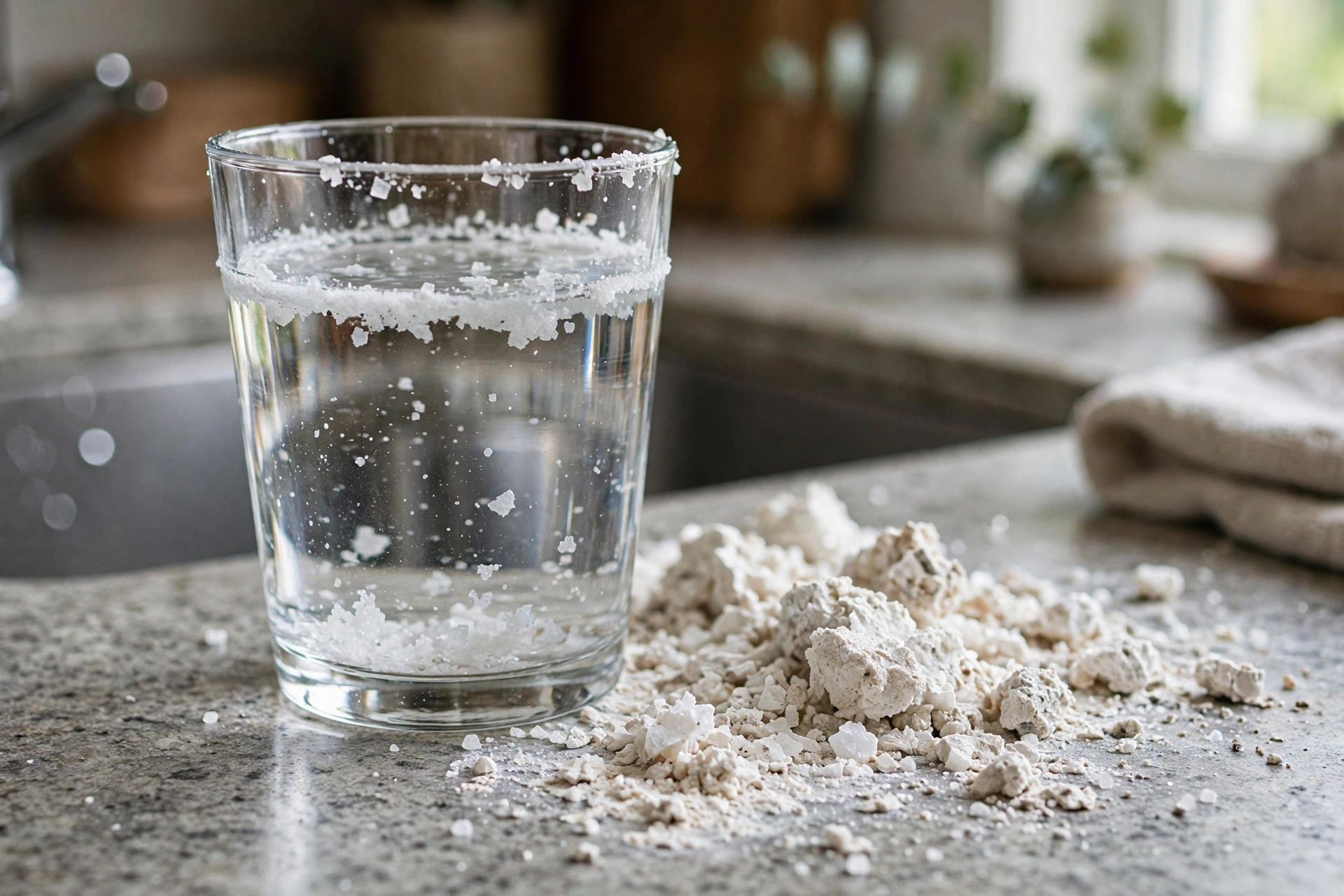
Ahmedabad's water is famously hard. If your kettle furs up with white scale in weeks, your taps crust over, and soap barely lathers, you are living with high-TDS water — and picking the right RO for hard water in Ahmedabad starts with knowing your area's actual numbers, not a salesman's pitch. In some parts of the city, borewell TDS crosses 1,500 ppm; in others it is a mild 200–300. This guide gives you the honest, area-by-area picture, explains when a standard RO is enough and when you need more, and shows how to keep your purifier alive in hard-water conditions.
Why Ahmedabad's Water Is So Hard
It comes down to geology and supply. Large parts of the city draw on mineral-rich groundwater, and where borewell water mixes with or replaces the Narmada-fed municipal supply, dissolved solids shoot up. TDS (total dissolved solids, measured in ppm) is the number that matters: WHO guidelines treat 100–300 ppm as ideal for drinking, while anything above 500 starts tasting distinctly hard. Ahmedabad is unusual because the range across the city is enormous — which is why one neighbour swears by their RO while another, two kilometres away, barely needs one.
Ahmedabad Area-Wise TDS: Published Survey Data
A published survey of drinking water across 20 Ahmedabad areas (Divya Bhaskar) measured just how wide the gap is. Use this as a starting map — your own home's reading is what counts:
| Area | Measured TDS (approx.) | What it means |
|---|---|---|
| South Bopal | Above 1,800 ppm | Very hard — RO essential, consider pre-treatment |
| Ghuma | Above 1,500 ppm | Very hard — RO essential, consider pre-treatment |
| Godrej Garden City / Jagatpur | 1,200–1,300 ppm | Very hard — RO with strong pre-filtration |
| Science City | ~1,200 ppm | Very hard — RO with strong pre-filtration |
| Gota / Satellite | 900–1,000 ppm | Hard — standard RO, faster filter wear |
| New Ranip / Sabarmati / Chandkheda | 600–1,000 ppm | Hard — standard RO works well |
| Motera / New Wadaj / New CG Road | 700–800 ppm | Hard — standard RO works well |
| Naranpura | 200–300 ppm | Moderate — UV/UF may be enough |
5 Signs Your Home Has Hard Water
- White scale on taps and kettles. Chalky crust that keeps coming back after cleaning.
- Soap and shampoo don't lather. You use more product and skin feels filmy after a shower.
- Stiff, dull laundry. Clothes come out of the wash feeling rough and looking grey.
- Water spots on steel utensils and tiles. Droplets dry into visible white marks.
- Your RO's filters die young. If a pre-filter turns brown in 6 weeks, your TDS is doing the damage.
When a Standard RO Is Enough (and When It Isn't)
Match the treatment to the number:
- Below 300 ppm (e.g. parts of Naranpura): RO is usually overkill. A UV/UF purifier protects against germs without stripping minerals. Installing an RO here actually lowers TDS to unhealthy levels — the survey found RO-treated water in some areas dropping to 20–67 ppm, well below the ideal range.
- 300–1,000 ppm (most of Ahmedabad): A standard domestic RO is exactly the right tool. This is where most of our service calls land.
- 1,000–1,500 ppm (Ghuma, Science City belt): RO still works, but fit a good external pre-filter and service strictly on schedule — the membrane takes a beating otherwise.
- Above 1,500 ppm (South Bopal and similar pockets): Talk to a professional before buying. A water softener as pre-treatment before the RO is often the right design; RO alone will chew through membranes.
Hard Water Kills Purifiers Faster: Maintenance That Matters
Hard water is the number-one reason Ahmedabad purifiers need more attention than the manual suggests. In areas above 800 ppm:
- Change the sediment pre-filter every 2–3 months (not 3–4).
- Book a general RO service every 6 months — our ₹299 service includes a TDS reading before and after, so you can see the membrane's condition in numbers.
- Expect the RO membrane to last 12–18 months instead of up to 24. A sudden jump in output TDS is the membrane asking for replacement.
- Descale the storage tank on every service visit — mineral film builds up inside it too.
This is also where an RO AMC plan quietly pays for itself: with hard water, you will genuinely use every scheduled visit, and breakdown-visit labour is already covered.
Should You Also Buy a Water Softener?
An honest answer: a water softener for your Ahmedabad home and an RO do different jobs. The softener sits on your main line and protects plumbing, geysers, washing machines, and bathroom fittings from scale — the whole house benefits. The RO sits under your kitchen sink and makes your drinking water safe and good-tasting. One does not replace the other.
You need a softener when: your TDS is above 1,500 ppm, geyser elements keep failing, or scale is visibly damaging fittings. For most homes between 300 and 1,000 ppm, a good RO plus honest maintenance is the complete answer. We install and service water softeners across Ahmedabad and Gandhinagar — if you are unsure which camp your home is in, a single TDS test settles it.
The bottom line: do not buy an RO — or skip one — based on a neighbourhood rumour. Test your own water first. If you are in Ahmedabad or Gandhinagar, call +91 63560 23655: our ₹150 visit includes the TDS test, and we will tell you honestly whether your water needs an RO, a softener, or nothing at all.