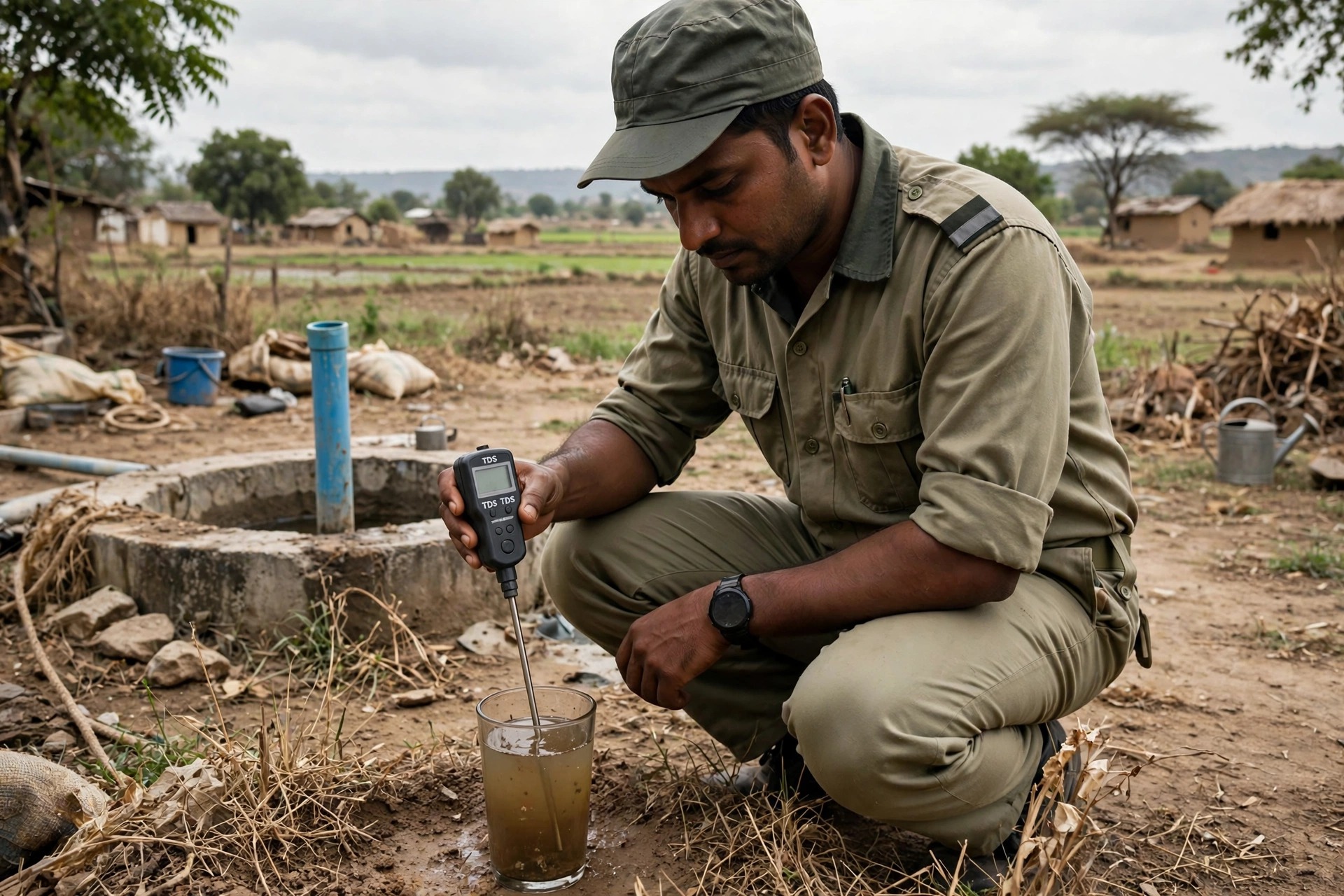
How often should your RO be serviced? The honest answer is: it depends on your water. Ahmedabad homes run on Narmada or Mahi municipal supply, on borewell water, or on both — and each wears your filters differently. This guide explains RO service in Ahmedabad intervals by water source, plus the two local events — monsoon and canal shutdowns — that shorten them.
Ahmedabad's Two Waters
Municipal supply in Ahmedabad comes largely from the Narmada and Mahi systems. Borewell water comes from the ground under your own area. As a general rule, borewell water carries more dissolved minerals than municipal water, so it loads filters faster. Many homes use both — municipal supply most days, borewell as backup — which means their interval sits between the two.
Borewell Water: Service More Often
For borewell-water homes, the general guidance is simple: service more often. The pre-filter clogs faster, dissolved solids creep up, and flow slows sooner. There is no single month number that fits every borewell home, because borewell quality varies by area and depth — so the technician checks TDS, pre-filter condition and flow at each visit and advises from those readings. Book sooner if flow slows, taste changes, or white marks appear on vessels.
Narmada / Municipal Water: The Standard Rhythm
Municipal water is generally steadier in quality, so these homes follow the standard service rhythm. That does not mean skipping service: the pre-filter, TDS and tank pressure still need regular checks, and clear-looking water is not proof the filters are fine. A steady supply makes intervals predictable — it does not remove them.
Monsoon Changes the Interval
Heavy rain stirs sediment, and municipal supply can turn muddy during sustained wet spells. Filters load faster in those weeks, so a check after heavy monsoon spells is sensible. If flow slowed or taste changed during the monsoon, book a check rather than waiting for the calendar.
Canal Shutdowns: The Hidden Interval Shortener
When canal supply stops, homes switch to borewell or tanker water — and the dissolved load jumps overnight. That shortens the service interval during those periods even though nothing about the purifier changed. After normal supply resumes, a check is sensible, because the filters absorbed the higher-load weeks.
Signs Your RO Needs Service Now (Whatever the Calendar Says)
- Slow flow from the RO tap, or the tank taking much longer to fill.
- Salty or bitter taste, or white marks appearing on vessels.
- A rising TDS reading on a handheld meter.
- Reject water running continuously instead of stopping when the tank is full.
- A new noise from the pump or the unit during operation.
Any one of these means book a check now. Waiting for the calendar while a symptom is showing is how a small filter job becomes a membrane job.

What the Technician Checks at a Service Visit
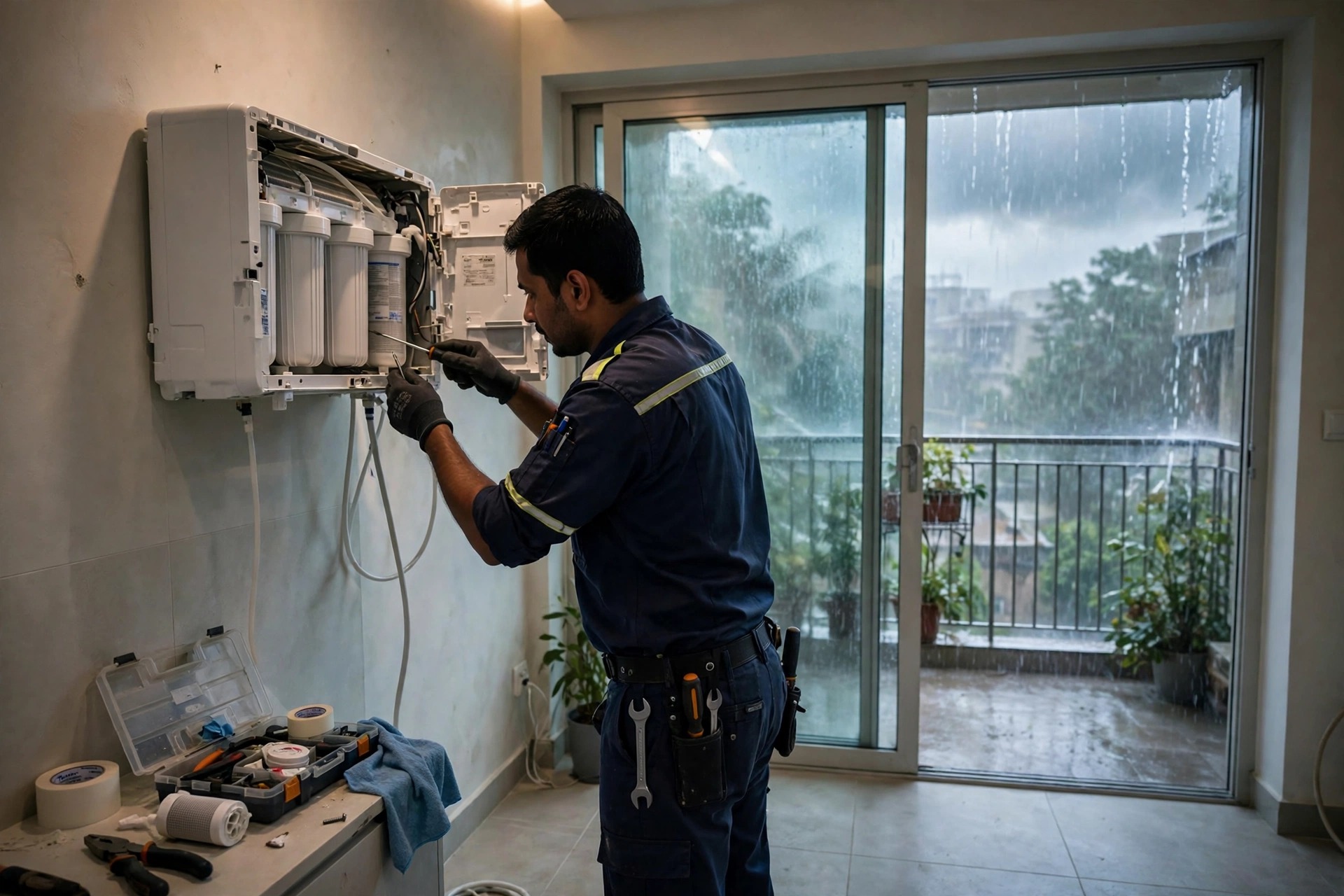
Every service visit checks the same set: TDS of input and output water, pre-filter condition, membrane flow, tank pressure, reject-water flow and leaks. Those readings — not the calendar alone — decide whether a filter or membrane needs changing, and they are what set your next interval.

Book a Service Check
For RO service intervals advice for your water source, or to book a check, call 63560 23655 or 90162 67231 between 8 AM and 8 PM, Monday to Sunday. Share your water source — borewell, municipal or both — and your area, and the slot is confirmed on the call itself. Visit ₹150, service ₹299, filter from ₹199+.