When a factory, hospital, hotel, school or housing society searches for industrial RO plant service near me, the need is usually urgent. A commercial or industrial RO plant is not a single kitchen appliance. It supplies water for production, drinking, cooking, laundry or a whole building, and when it stops or its output falls, daily work is affected within hours. This guide explains what industrial RO plant service includes, how emergency response works, how a plant AMC is quoted, how plant service differs from domestic RO service, and which cities across Gujarat are covered.
Nyasa Enterprise is an independent RO service provider offering industrial RO plant service across Gujarat. Unlike domestic RO service, which is limited to Ahmedabad and Gandhinagar, industrial and commercial plant service covers the whole state. Service visits are available Monday to Sunday, 8 AM to 8 PM, and every plant service carries a 30-day warranty.
What Industrial RO Plant Service Includes
A standard industrial RO plant service visit starts with a full inspection of the plant, not just one part. The service team checks the feed water arrangement, pre-treatment filters, membrane vessels, high-pressure pump, piping and joints, storage tanks, control panel readings and the treated water outlet. Each check has a purpose. Pre-treatment protects the membranes, the pump sets the pressure the membranes need, and the panel readings show whether the plant is running within its normal range.
During a routine service visit, clogged pre-filters are cleaned or replaced, strainers are checked, pressure gauges are read and compared with earlier readings, and every visible joint is checked for leakage. The team measures the TDS of the feed water and the treated water, and checks the output flow against the plant capacity. These readings are the simplest way to judge plant health.
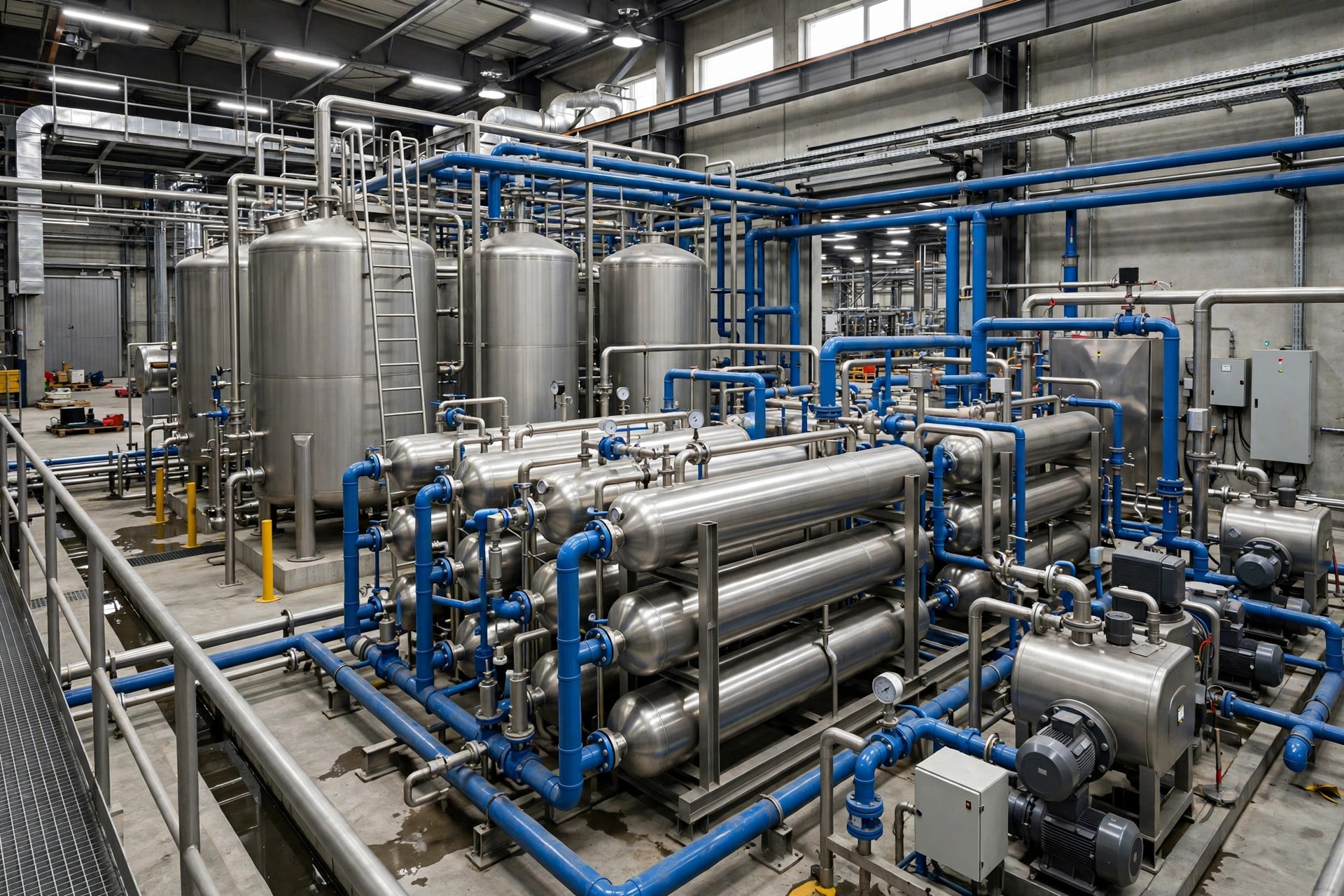
A service visit also includes checking the reject water flow. A healthy plant produces treated water and reject water in a steady ratio. If reject flow is too high, water is wasted. If it is too low, membranes can foul faster. Adjusting this balance is part of proper plant maintenance, and it is one of the reasons a plant should be serviced on a schedule instead of only when it breaks down. Small corrections during a routine visit often prevent a costly membrane replacement later.
Membrane and Filter Care for Plants
Membranes are the working heart of an RO plant. They remove dissolved salts and impurities from water, and their condition decides both water quality and output. Over time, membranes collect deposits from the feed water. This is called fouling, and it shows up as falling output, rising treated water TDS, or higher operating pressure. Regular service slows this process, because clean pre-filters and correct pressure keep the load on the membranes within limits.
Filter care for a plant follows a fixed order. Pre-filters and carbon filters are checked first, because they catch sediment and chlorine before water reaches the membranes. When these filters are choked, the membranes starve for water and the pump works harder. Replacing a choked pre-filter on time is a small job that protects a much larger investment. The service team follows a simple rule on every visit: proper diagnosis before replacement. A membrane is not replaced only because output has fallen. The team checks the pre-filters, pump pressure, TDS readings and reject flow first, so the real cause is fixed and a working membrane is not changed needlessly.
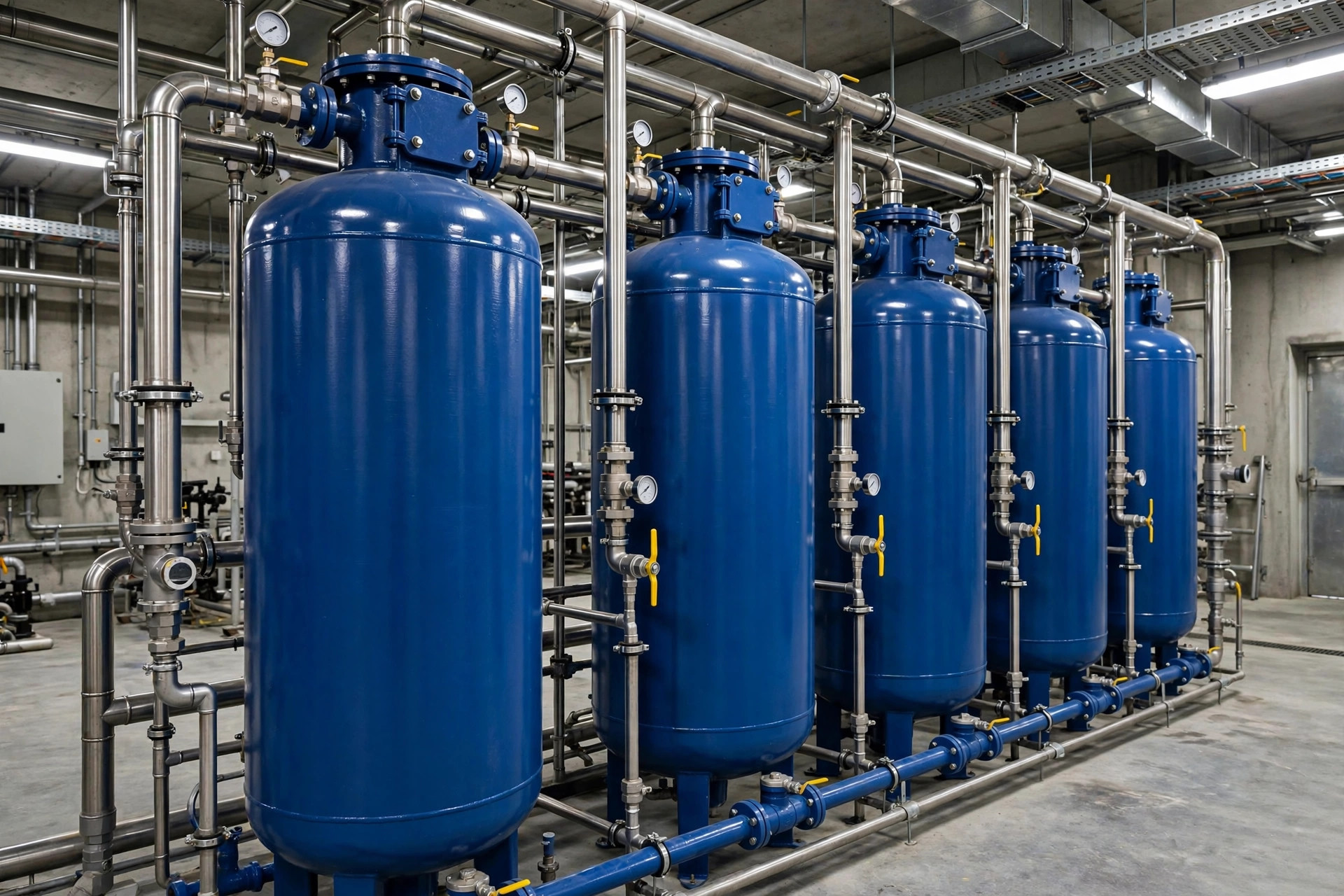
When a membrane does need cleaning or replacement, the team explains the finding before doing the work. The owner sees the TDS readings and the output figures, and the replacement is done with quality parts with proper billing. Keeping a short record of each visit helps here. Note the date, the feed and treated water TDS, the output flow and any part changed. Over a few visits, this record shows whether the plant is stable or slowly losing performance, and it makes the next diagnosis faster.
Pump Checks, TDS and Output Checks
Pumps decide whether a plant can run at all. A plant usually has a feed pump and a high-pressure pump, and larger plants may have additional dosing or transfer pumps. During service, each pump is checked for unusual noise, vibration, overheating and leakage at the seals. Pressure readings before and after the pump are compared, because a pump that cannot hold pressure will show up as low output even when the membranes are fine.
TDS and output checks complete the picture. The team measures feed water TDS, treated water TDS and, where the plant allows it, the TDS of the reject stream. Treated water TDS should stay within the range the plant was set up for. A sudden rise points to a membrane or sealing problem, while a gradual rise over several visits usually means the membranes are ageing or fouling. Output is measured in litres per hour and compared with the plant rated capacity.
Emergency Response for Plants
Some plant problems cannot wait for the next routine visit. A plant that has stopped completely, a major leakage, a pump failure, or an alarm on the control panel can halt drinking water supply or production. For these situations, Nyasa Enterprise provides emergency response for plants across Gujarat. The industrial emergency charge is ₹2,000, and the visit carries the same 30-day warranty as a standard service.
When you call for an emergency plant visit, keep four details ready: the plant location, the plant capacity, the symptom, and any reading you can see, such as treated water TDS or a pressure gauge value. These details help the team judge urgency and carry the right tools and parts. While waiting, switch the plant off if water is leaking heavily, and note any alarm or warning shown on the panel. Do not open membrane vessels or pump parts yourself, because a pressurised plant needs to be handled with the system isolated and depressurised.
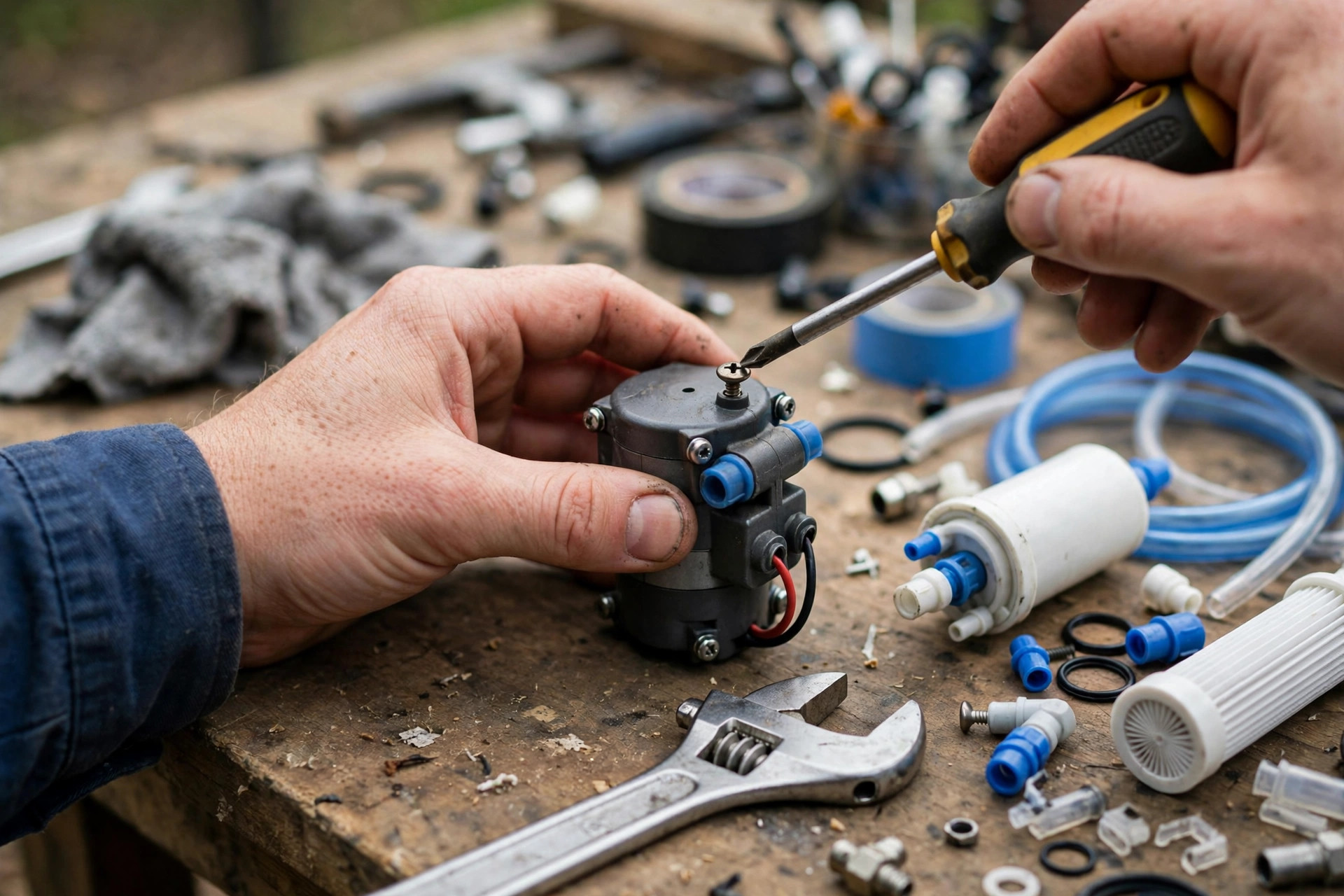
Emergency visits follow the same diagnosis-first approach as routine service. The team finds the failed part or setting, explains it, and then repairs or replaces it. If a part is not available on the spot, the team explains what is needed and what the plant can safely do in the meantime.
Plant AMC: Quoted After Inspecting the Plant
A plant AMC is a maintenance contract that covers scheduled service visits and priority attention for the plant over an agreed period. It suits plants that run daily, because regular checks keep output and water quality steady and catch small faults before they grow.
Industrial plant AMC is quoted after inspecting the plant. There is no single fixed figure, because plants differ widely in capacity, number of membrane vessels, pump size, feed water source, daily running hours and present condition. A small commercial plant and a large industrial plant need different levels of attention, so a fair quote can only be given after the plant has been seen and its readings checked. Domestic AMC plan prices do not apply to industrial plants and are never used as a substitute for a plant quote.
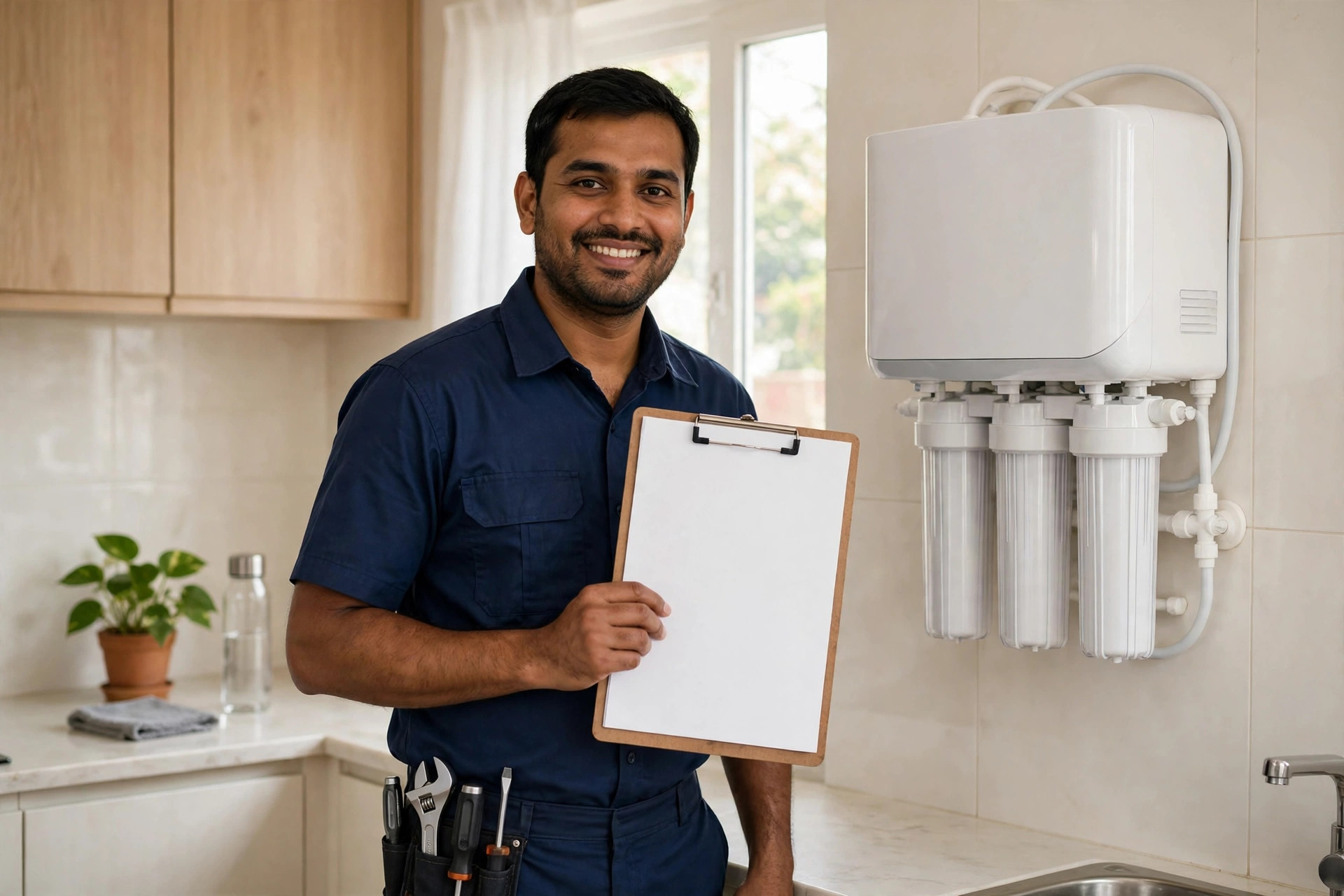
To get a plant AMC quote, book an inspection visit. The team inspects the plant, records its capacity and condition, and then gives a written quote that explains what the AMC covers, how many scheduled visits are included and how emergency attention works during the contract period. This way the owner knows exactly what is included before agreeing to anything, and there are no surprises about parts or visits later.
How Plant Service Differs From Domestic Service
Plant service and domestic RO service look similar from the outside, but they differ in scale, parts and downtime. A domestic purifier serves one household and has one small membrane and one booster pump. An industrial plant serves a facility, has multiple membrane vessels, larger pumps, bigger piping, storage tanks and control equipment, and it often runs for many hours a day. A fault in a domestic purifier is an inconvenience. A fault in a plant can stop production or drinking water supply for hundreds of people.
Service time differs too. A domestic visit is usually short, with a fixed domestic service and repair charge of ₹299 and a domestic visit charge of ₹150. An industrial plant service visit takes longer, because more components must be checked and readings must be compared across the whole system. The industrial service charge is ₹1,500, and the industrial emergency charge is ₹2,000. Both industrial charges are fixed and stated before the visit, and both carry a 30-day warranty.
The water source also changes the work. Domestic purifiers usually run on municipal water, while plants often run on borewell water, tanker water or a mix of sources, and the feed water quality decides how fast filters and membranes foul. Plant service therefore pays more attention to pre-treatment and to feed water readings. Finally, coverage differs. Domestic service is available in Ahmedabad and Gandhinagar only, while industrial RO plant service near me searches are served across the whole of Gujarat, as the city section below explains.
Industrial RO Plant Service Across Gujarat
Industrial RO plant service near me in Gujarat means service that reaches the plant wherever it is installed, from large industrial estates to smaller towns. The following cities are covered for industrial and commercial plant service. Each city page gives local details, and the statewide service team can be reached on the same numbers from anywhere in Gujarat.
- Industrial RO plant service in Surat for textile units, diamond units, hospitals, hotels and housing societies across the city.
- Industrial RO plant service in Vadodara for industrial estates, commercial buildings and institutions in and around the city.
- Industrial RO plant service in Rajkot for engineering units, factories and commercial premises across the region.
- Industrial RO plant service in Ankleshwar for units in the industrial estate and nearby industrial areas.
- Industrial RO plant service in Bharuch for industrial and commercial plants in the Bharuch region.
- Industrial RO plant service in Bhavnagar for factories, institutions and commercial buildings in the city.
- Industrial RO plant service in Gandhidham for port-area businesses, warehouses, hotels and commercial premises.
- Industrial RO plant service in Jamnagar for industrial units and commercial establishments across the city.
- Industrial RO plant service in Junagadh for institutions, hotels and commercial plants in the region.
- Industrial RO plant service in Mehsana for industrial units, dairy-linked facilities and commercial premises.
- Industrial RO plant service in Morbi for ceramic units and other industrial plants in the Morbi region.
- Industrial RO plant service in Vapi for units in the industrial estate and nearby commercial areas.
- Industrial RO plant service in Ahmedabad for factories, hospitals, hotels, schools and societies across the city.
- Industrial RO plant service in Gandhinagar for government-linked institutions, commercial buildings and industrial units in the capital region.
If your plant is in a town near one of these cities, call and confirm the schedule. Plant visits are planned around location and plant size, so a short call with the plant capacity and the problem is enough to arrange a visit. The same fixed industrial charges apply: ₹1,500 for a standard plant service and ₹2,000 for an emergency plant visit, with a 30-day warranty on the work.
Before You Book a Plant Service Visit
A little preparation makes the visit faster. Note the plant capacity, the feed water source, the symptom, and the latest TDS reading if you have one. Keep the plant area accessible, and keep earlier service records nearby if they exist. If the plant has stopped, note when it stopped and whether any alarm appeared.
To book industrial RO plant service near me in Gujarat, call +91 63560 23655 or +91 90162 67231, or write to contact.nyasaenterprise@gmail.com. Service is available Monday to Sunday, 8 AM to 8 PM. A standard plant service costs ₹1,500, an emergency plant visit costs ₹2,000, and plant AMC is quoted after inspecting the plant. Every visit follows the same approach: proper diagnosis before replacement, quality parts with proper billing, and a 30-day warranty on the work done.