A puddle under the sink, a damp cabinet floor, or a slow drip from a pipe joint is how most people first notice a leaking RO purifier. It may look small, but a leak in an RO system should never be left to sort itself out. Water keeps moving through the purifier whenever the inlet supply is open, so a drip that starts at one joint can spread inside the cabinet, weaken the shelf underneath, and waste a steady amount of water through the day. This guide explains RO leakage repair near me in Ahmedabad and Gandhinagar: what causes leaks, what to do in the first few minutes, how a proper diagnosis-first repair works, what it costs, and how to reduce the chance of the same leak coming back.
Nyasa Enterprise is an independent RO service provider offering doorstep service, repair, installation and AMC in Ahmedabad and Gandhinagar, Monday to Sunday, 8 AM to 8 PM. The prices in this guide are the exact prices charged for a visit, so you can decide before anyone rings your doorbell. If your purifier is leaking right now, skip to the section on what to do immediately, shut the inlet supply, and then read the rest of the guide before you book.
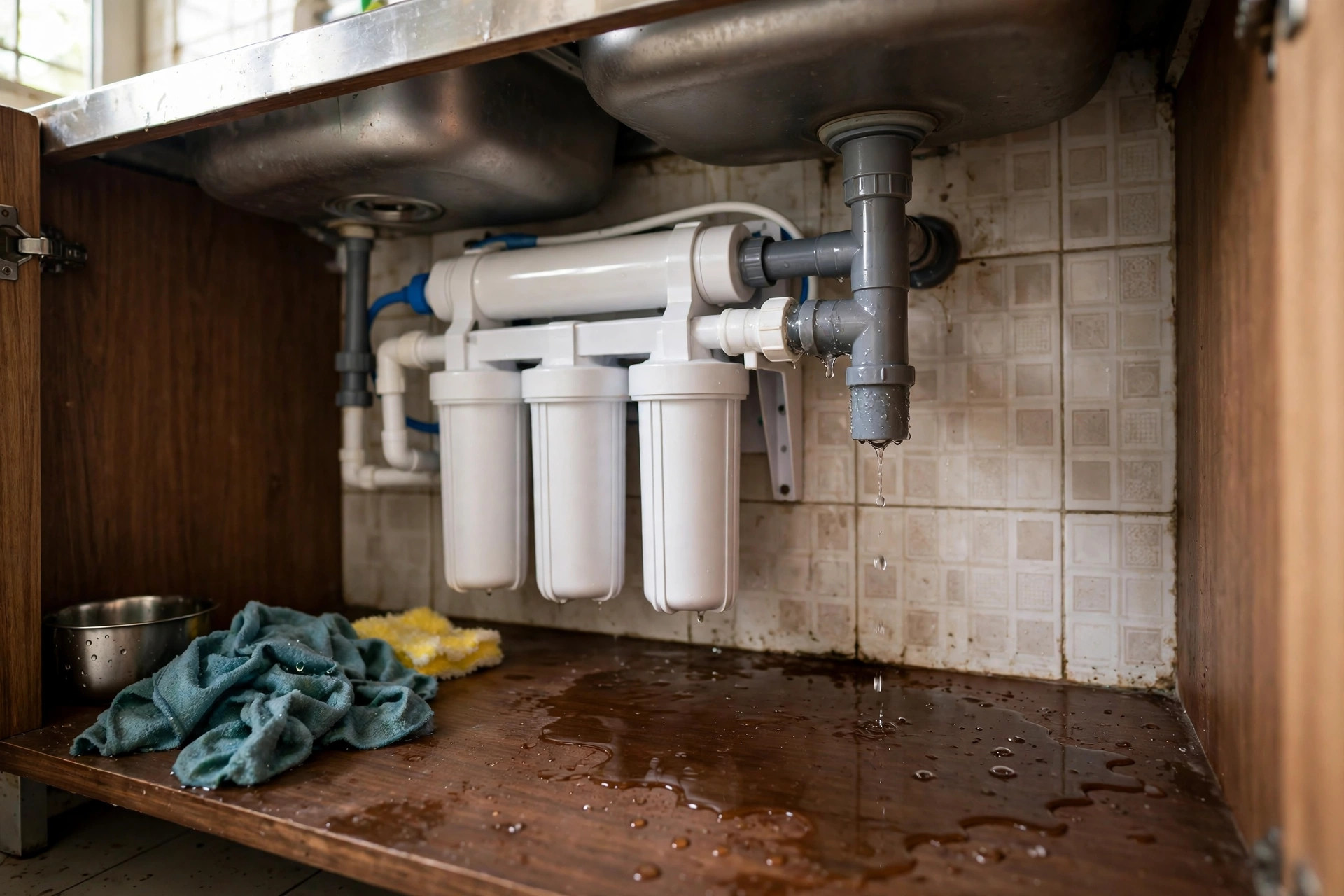
Common Causes of RO Leakage in Ahmedabad and Gandhinagar
Most RO leaks come from a small number of places. Knowing where the water is coming from helps you describe the problem clearly when you book, and it helps the technician carry the right fittings and tubes on the first visit. The five causes below cover almost every leakage call in Ahmedabad and Gandhinagar homes.
1. Loose Fittings and Connectors
An RO purifier has many push-fit connectors and elbow fittings joining filters, the membrane housing, the pump, the storage tank and the tap. Over time, vibration from the pump, movement when filters are changed, or a fitting that was never fully seated can loosen a connection just enough for water to seep out. A loose fitting often shows as a slow drip at a joint, or as dampness that appears only while the purifier is filling. The fix is usually straightforward: the fitting is reseated or replaced, and the joint is checked under pressure.
2. Damaged or Worn Tubes
The thin tubes that carry water between RO stages can crack, kink, or wear where they bend sharply or rub against the cabinet edge. Hard water deposits and heat under the sink can also make older tubes brittle. A damaged tube may leak only at one point, but it can also spray a fine jet when the pump runs, which is why a leak sometimes looks worse during filling and stops when the tank is full. During a repair visit, the damaged section is identified, the tube is replaced with the correct size, and the new run is routed so it does not bend sharply or press against a sharp edge.
3. Membrane Housing Cracks
The membrane sits inside a sealed housing that is under pressure whenever the purifier runs. A hairline crack in the housing, a worn O-ring seal, or a cap that has not been tightened evenly can let water escape around the housing. This type of leak is easy to miss at first because the water may run down the back of the unit and collect underneath it. The housing, its seals and its caps are inspected, the faulty part is replaced, and the unit is run through a full filling cycle before the visit ends.
4. Storage Tank Issues
The storage tank holds purified water under air pressure, and it connects to the rest of the system through a valve at the top. If that valve loosens, its seal wears, or the tank itself develops a fault, water can leak around the tank connection or from the tank area. Tank problems also show up in other ways: the tank may take much longer to fill, the tap flow may weaken, or water may keep running to drain. The technician checks the tank valve, the tank pressure and the connecting tube together, because fixing only one part while another is failing will bring the leak back within days.
5. Tap and Faucet Leakage
Not every RO leak comes from inside the cabinet. The RO tap on the sink can drip from its spout, leak at its base, or seep where its supply tube connects underneath. Tap leaks are often noticed later than cabinet leaks because the water runs into the sink and disappears, leaving only a damp patch or a stain around the tap base. A tap leak may need a new washer, a reseated connection, or a replacement tap, depending on where the water is coming from. The RO repair diagnosis guide explains how each of these checks fits into a full inspection, so a tap drip is not mistaken for a cabinet leak, or the other way round.
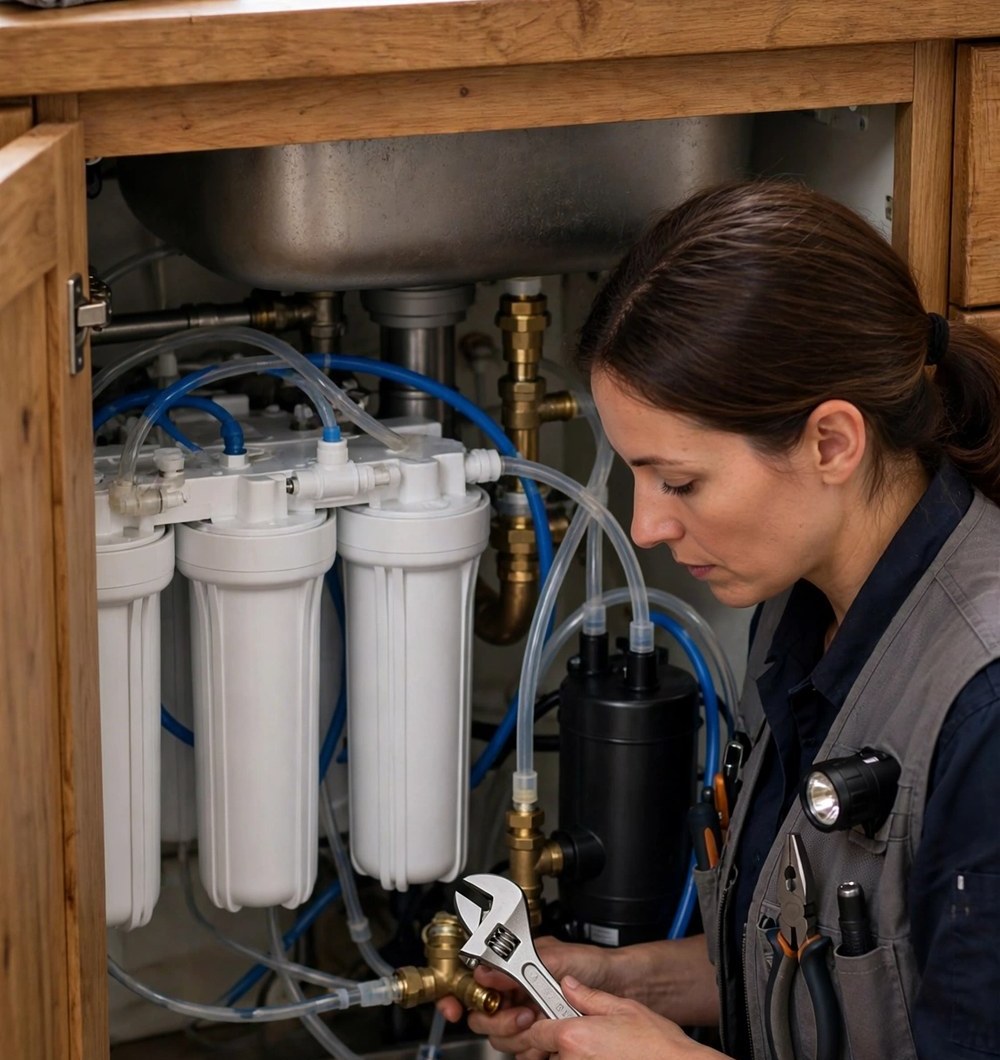
RO Leakage Repair Near Me: What to Do Immediately in Ahmedabad and Gandhinagar
If you find water under or around your RO purifier, three steps in the first few minutes will limit the damage and make the repair simpler.
First, shut the inlet water supply to the purifier. The inlet valve is usually on the pipe feeding the unit, near the wall or under the sink. Turning it off stops new water entering the system. If you cannot find the inlet valve, turn off the tap that feeds the purifier and keep the RO tap closed as well.
Second, place a container under the drip and dry the surrounding area with a cloth. A bowl or a wide container catches the remaining water, and drying the cabinet floor lets you see whether the drip has actually stopped or is still coming from a joint. Keep towels or cloths away from electrical points and the pump, and do not plug in or switch on the purifier while the area is still wet.
Third, do not ignore small drips. A drip that seems too small to matter can run for hours while you are out or asleep, and it can damage the cabinet, the shelf, and items stored nearby. A small drip is also a warning sign: a fitting that seeps today can fail more seriously later. Note where the water is coming from, whether it happens only while the purifier is filling, and whether the tap flow or the tank filling has changed. Those three details help the technician find the fault faster on arrival.
Do not seal a pressurised joint with tape as a long-term fix; it hides the real fault. Shut the inlet supply, contain the water, and book a proper check.
How a Diagnosis-First Leakage Repair Works
A leakage repair should start with diagnosis, not with changing parts. The technician first asks when the leak started, where the water appears, and whether it happens during filling, during use, or all the time. The unit is then checked in a fixed order: inlet valve and supply tube, pre-filters and their housings, the membrane housing and its seals, the pump and its connections, the storage tank valve and pressure, and finally the tap and its connections. Each joint is checked while the system is under pressure, because some leaks only appear when the pump is running.
Once the source is found, the technician explains it in plain words and gives an itemised quote before any work starts. Only the faulty fitting, tube, seal, housing or tap part is replaced, and quality parts with proper billing are used. After the replacement, the purifier is run through a filling cycle and every joint is rechecked, so you can see that the leak has stopped before the visit ends. The RO repair fix guide describes this step-by-step approach in detail, and it is the same process followed for leakage calls in both Ahmedabad and Gandhinagar.
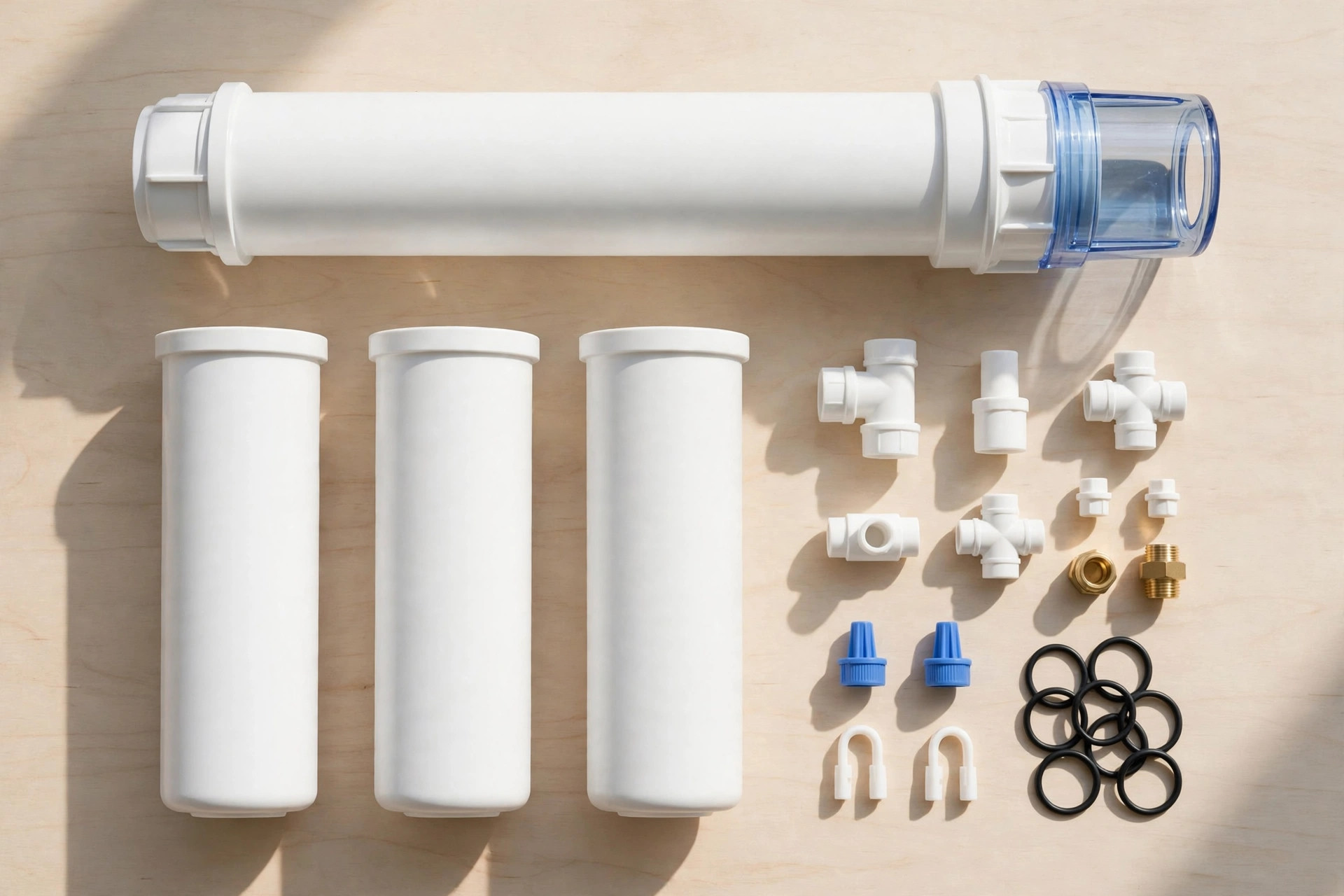
RO Leakage Repair Charges in Ahmedabad and Gandhinagar
Leakage repair charges follow the same fixed price list as other domestic RO visits. There are no separate leakage rates, and no price is added at the end of the visit without being quoted first. The full price list is explained in the RO service charges guide.
| Service | Charge |
|---|---|
| Doorstep visit charge (fixed) | ₹150 |
| Domestic RO service and repair | ₹299 |
| Filter change | ₹199 onwards |
| New RO installation | ₹499 |
| Priority visit for urgent breakdowns | ₹399 |
| Annual Maintenance Contract (AMC) | ₹1,999 / ₹2,999 / ₹3,999 per year |
The visit charge is fixed at ₹150 whether you go ahead with the repair or not. If you approve the work, domestic service and repair starts at ₹299, and any fitting, tube, seal or other part is quoted upfront before it is fitted. If you decline the work after diagnosis, you pay only the ₹150 visit charge and keep the findings and the quote. Every service and repair visit carries a 30-day warranty on the work done, so if the same leak returns within 30 days, call the same number and a revisit is arranged to re-check the work. Keep the bill for the visit, as it records what was done, which parts were fitted, and what was charged.
Repair or Replace: When a Leak Means a Bigger Decision
Most leaks are repaired with a small part and the purifier keeps working normally. A bigger decision arises only when the leak points to a wider problem, for example a cracked housing combined with very old filters, a tank that has lost pressure repeatedly, or several joints failing at the same time. In those cases the technician explains both options — the cost of repairing the faulty parts, and what a replacement would involve — so you can compare them with full information. The repair or replace guide sets out how that comparison is made, including when a repair is clearly the sensible choice and when repeated faults make replacement worth considering. No work beyond the agreed repair starts without your approval.
Prevention Tips: How to Reduce RO Leakage at Home
A few simple habits reduce the chance of a leak between services. First, look under the sink once a month. A quick check for dampness, a drip, or a stain takes less than a minute and catches most leaks while they are still small. Second, do not move the purifier or pull on its tubes when cleaning around it, as a pulled tube can loosen a fitting without you noticing. Third, keep the area under the sink dry and uncluttered, so a leak is visible straight away instead of soaking into stored items first.
Fourth, book a regular service every 6 to 12 months, depending on usage and water quality; fittings, tubes, seals and tank pressure are all checked during a service. Fifth, report changes early: slower flow, longer tank filling, a new pump noise, or a change in taste can accompany a developing fault. The RO service near me FAQs cover service frequency, warranty and booking in more detail.
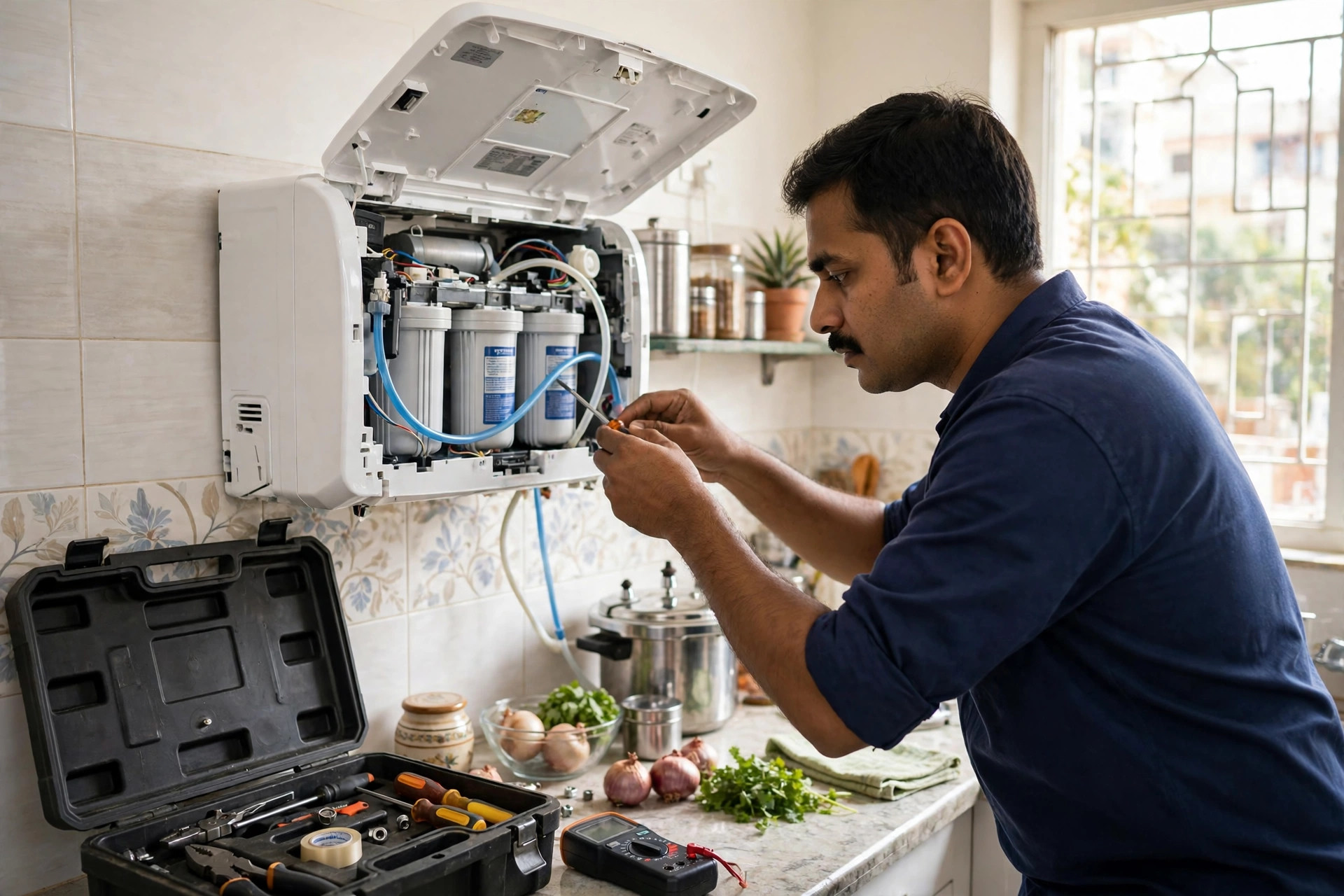
RO Leakage Repair Near Me in Ahmedabad and Gandhinagar: Areas Covered
Domestic RO leakage repair covers Ahmedabad and Gandhinagar only. In Ahmedabad, service covers Ranip, Chandkheda, Bopal, Gota, Naranpura, Satellite, Sabarmati, Motera, Vastrapur, Thaltej, Maninagar, Nikol, Ghatlodia, South Bopal and other major areas, including RO service in Ranip, Ahmedabad. In Gandhinagar, service covers the Sectors, GIFT City, Kudasan, Raysan, Sargasan, Koba, Infocity, Pethapur, Vavol, Sughad and other major areas — see RO service in Gandhinagar for the full area list.
If your area is not named here, call and ask before assuming it is outside coverage. Visits run Monday to Sunday, 8 AM to 8 PM, and for an urgent leak a priority visit at ₹399 puts your booking ahead for the earliest available slot. When you book, share where the water is coming from, whether the leak happens during filling or all the time, and your purifier brand and model, so the technician can carry the right fittings on the first visit.
A leaking RO purifier is a straightforward repair when it is caught early and diagnosed properly. Shut the inlet supply, contain the water, do not ignore a small drip, and book a diagnosis-first visit. Call +91 63560 23655 or +91 90162 67231 for RO leakage repair near me in Ahmedabad and Gandhinagar, or visit roservicenearme.in for the full list of services and areas.