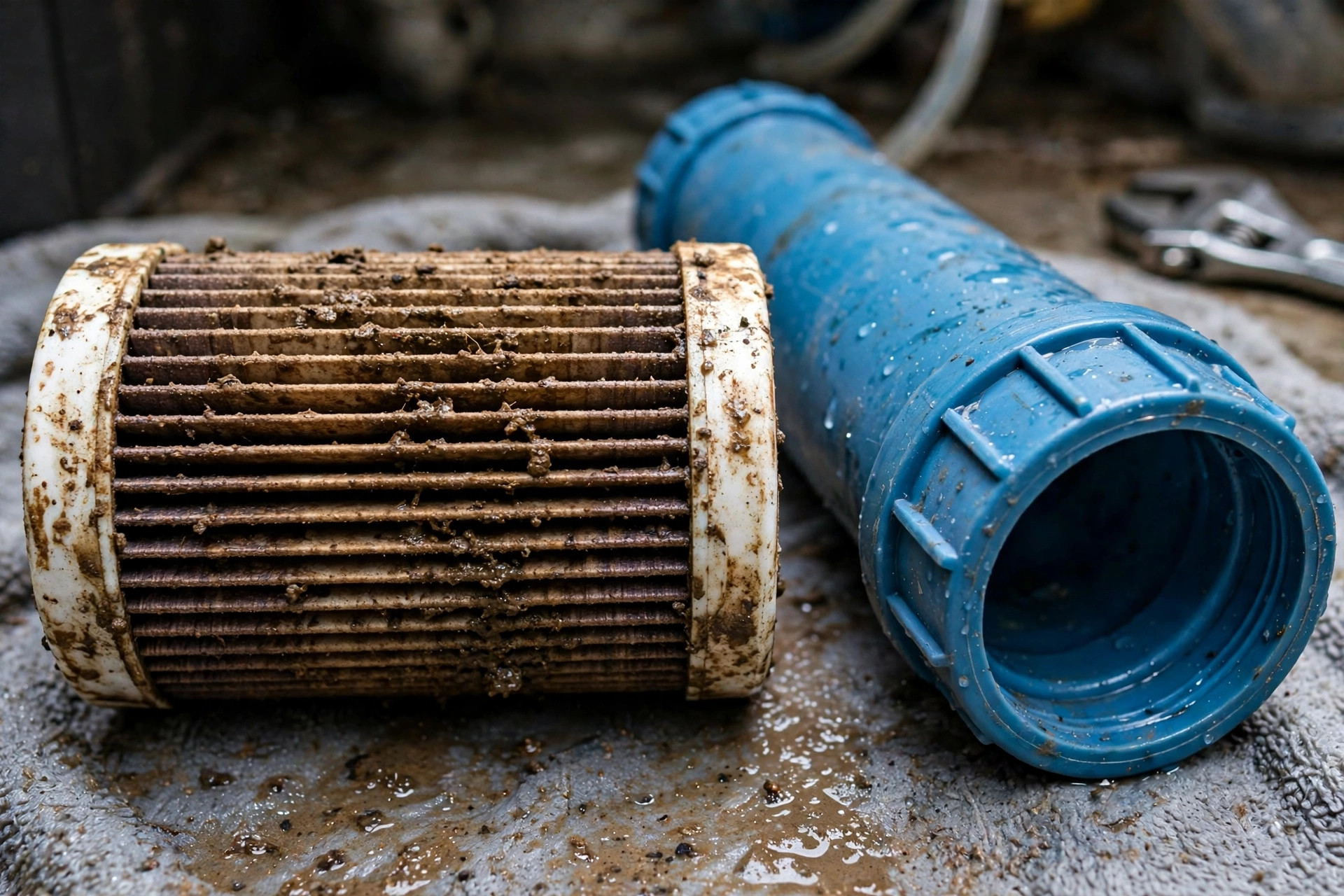
RO membrane replacement signs are easy to miss — because a dying membrane fails gradually, not all at once. One month the water tastes a little flat, the next the tank takes longer to fill, and by the third month the family has quietly started buying bottled water without realising the purifier stopped doing its job. The membrane is the heart of your RO purifier: a thin, tightly wound sheet that blocks dissolved salts, hardness, and contaminants while letting clean water through. When it wears out, everything downstream suffers — taste, flow, and water quality. Here are the five signs that mean your membrane needs replacement, not just another cleaning — plus the simple TDS test that confirms it before you spend anything.
Sign 1: Your TDS Keeps Creeping Up
This is the most reliable of all RO membrane replacement signs. TDS (total dissolved solids) measures everything dissolved in your water. A healthy membrane typically rejects 90% or more of the feed water's TDS. If your purified water measured 80 TDS a year ago and now reads 250 from the same tap, the membrane is letting dissolved salts through. A single reading proves little — what matters is the trend. If the number keeps climbing while your pre-filters are in good shape, the membrane is exhausted.
Sign 2: Water Flow Has Slowed to a Trickle
A clogged membrane forces water through ever-narrower passages, so the storage tank fills slower and a glass takes noticeably longer to fill. Before blaming the membrane, rule out the cheaper causes: a choked sediment pre-filter, a full tank with low air pressure, or a kinked pipe. If the pre-filters are fresh, the tank pressure is fine, and flow is still slow, the membrane itself is clogged.
Sign 3: The Taste Changed — Salty, Metallic, or Just Off
When dissolved salts slip past a worn membrane, water tastes salty, brackish, or metallic. A chlorine-like smell points to a different failure: the carbon filter is dead and chlorine is reaching — and damaging — the membrane. If your purifier's water suddenly tastes like the tap water it is supposed to improve, get the TDS checked. Taste plus a rising TDS reading is a near-certain verdict.
Sign 4: Your Membrane Is Past Its Working Life
RO membrane life is not a guess: most household membranes are rated for 2–3 years on normal municipal water, and often only 1–2 years on hard borewell water or where pre-filter changes run late. A membrane older than its rated life, showing even one other sign from this list, should be replaced rather than cleaned — cleaning an aged membrane buys weeks, not years, and the TDS usually climbs straight back.
Sign 5: Reject Water Ratio Has Jumped
Every RO purifier sends some water to drain — typically 2–3 litres of reject for every litre of pure water. When the membrane clogs, that ratio climbs: the pump runs longer, reject water flows for far longer, and your water bill quietly rises. If the reject pipe seems to run forever and the tank still fills slowly, the membrane is struggling to pass water through. Alone it can have other causes, but with slow flow or rising TDS it points squarely at the membrane.
Cleaning vs Replacement: When a Flush Still Helps
Not every tired membrane needs replacing. A professional flush or chemical clean can restore a membrane that is recently fouled — mild scaling, early biofilm, under two years old, TDS only slightly up. Cleaning cannot fix a torn, chemically damaged, or simply aged membrane. The honest test: clean it, re-measure the TDS rejection, and if the number does not recover, replace it. Do not open the housing yourself — the membrane surface damages easily.
The TDS Rejection Test: Confirm Before You Pay
Before paying for any part, ask for this test. The technician measures TDS of the feed water (input) and the purified water (output), then calculates: (1 − purified TDS ÷ feed TDS) × 100. A healthy membrane rejects 90% or more. If the result is below about 85% with fresh pre-filters in place, the membrane is exhausted — no matter how the water looks. Example: feed water at 800 TDS, purified at 240 TDS gives (1 − 240 ÷ 800) × 100 = 70% rejection. That membrane is done. Nyasa includes this test in the ₹150 visit.
RO Membrane Replacement Cost in Ahmedabad
There is no single honest price for a membrane, because it depends on your purifier's model and the membrane type it needs — flow rating, brand, and whether a genuine or equivalent-quality part is fitted. What you should insist on is process: diagnosis first, a written part-plus-labour quote before fitting, and the old membrane shown to you. That is exactly how Nyasa works — the ₹150 visit covers diagnosis and the TDS test, and you approve the quote before any part is replaced. For the full picture of service visit costs, see our RO service charges guide for Ahmedabad.
What to Ask Your Technician
When the technician arrives, ask for four numbers: feed TDS, purified TDS, rejection percentage, and the condition of your pre-filters. Ask to see the old membrane after removal, and ask whether late pre-filter changes killed it. If your purifier keeps surprising you with failures, a scheduled plan removes the guesswork: our RO AMC plans explained covers what an annual contract includes and what to check before signing. For faults that mimic membrane failure — pump trouble, tank pressure, faulty valves — see our RO common problems and solutions guide. One visit, four numbers — call +91 63560 23655 to book it.