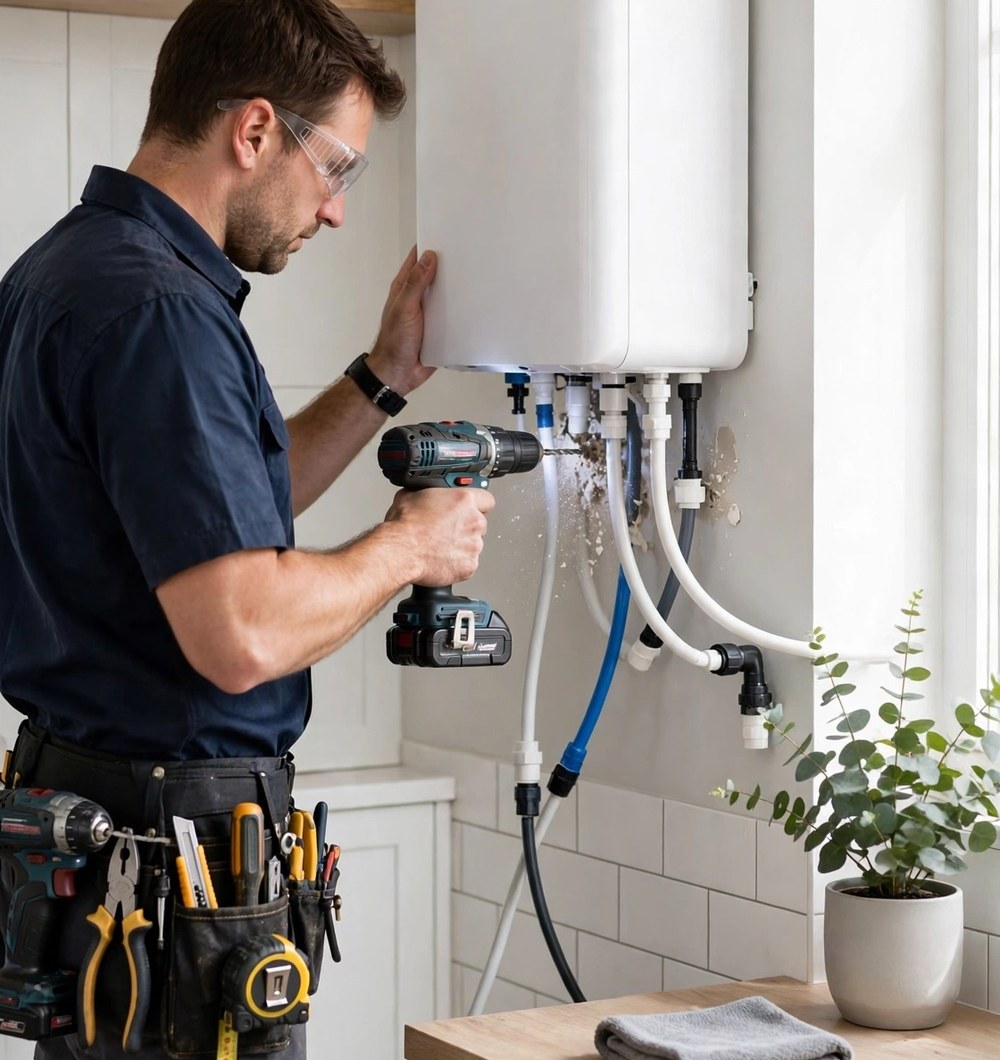
When people search for an RO plant near me, they rarely type just that. They type questions: which RO plant is best, which company RO plant is best, why is an RO plant used, how to maintain an RO plant, how to start an RO plant, and is an RO plant business profitable. This page answers those real questions honestly — including the ones where the honest answer is "it depends." No single plant is best for everyone, no business comes with guaranteed profit, and no service provider should tell you otherwise.
1. Which RO Plant Is Best?
The best RO plant near me answer depends on four things: how much water you need at peak hours, your feed water TDS and source, how much automation you can support, and who will service it after installation. A 1000 LPH plant is best for a hotel and wrong for a small office; a fully automatic plant is best where skilled operators are scarce and wrong where budgets are tight. Compare plants on membrane quality, automation level, parts availability and written service terms — not on advertisements. The best RO plant service near me is the team that answers the phone after installation, not the one with the glossiest brochure.
2. Which Company RO Plant Is Best?
There is no company that is best for every site. Judge a company on four things: service network in Gujarat, spares and accessories availability for the model they sell, a written quote with parts and warranty terms, and response time when the plant stops. Nyasa Enterprise is an independent service provider, not a manufacturer — we service RO plants regardless of make, which means our advice is not tied to pushing one brand. When a seller cannot tell you who services the plant in your city after delivery, that is your answer about that company.
3. Why Is an RO Plant Used?
An RO plant is used where large volumes of water must be purified consistently: hotels, hospitals, schools, factories, housing societies and bottled-water units. Reverse osmosis pushes feed water through a membrane that removes dissolved solids, bringing high TDS down to drinking or process quality. A home purifier does the same job at a small scale; a plant does it at hundreds or thousands of litres per hour, all day, with pre-treatment, pumps, membranes and post-treatment working as one system. That is why RO plant is used as a utility, not an appliance — when it stops, an entire building or production line feels it.
4. How Do I Maintain an RO Plant?
People who ask how to maintain ro plant usually want a schedule, not a theory — and a schedule is exactly what works.
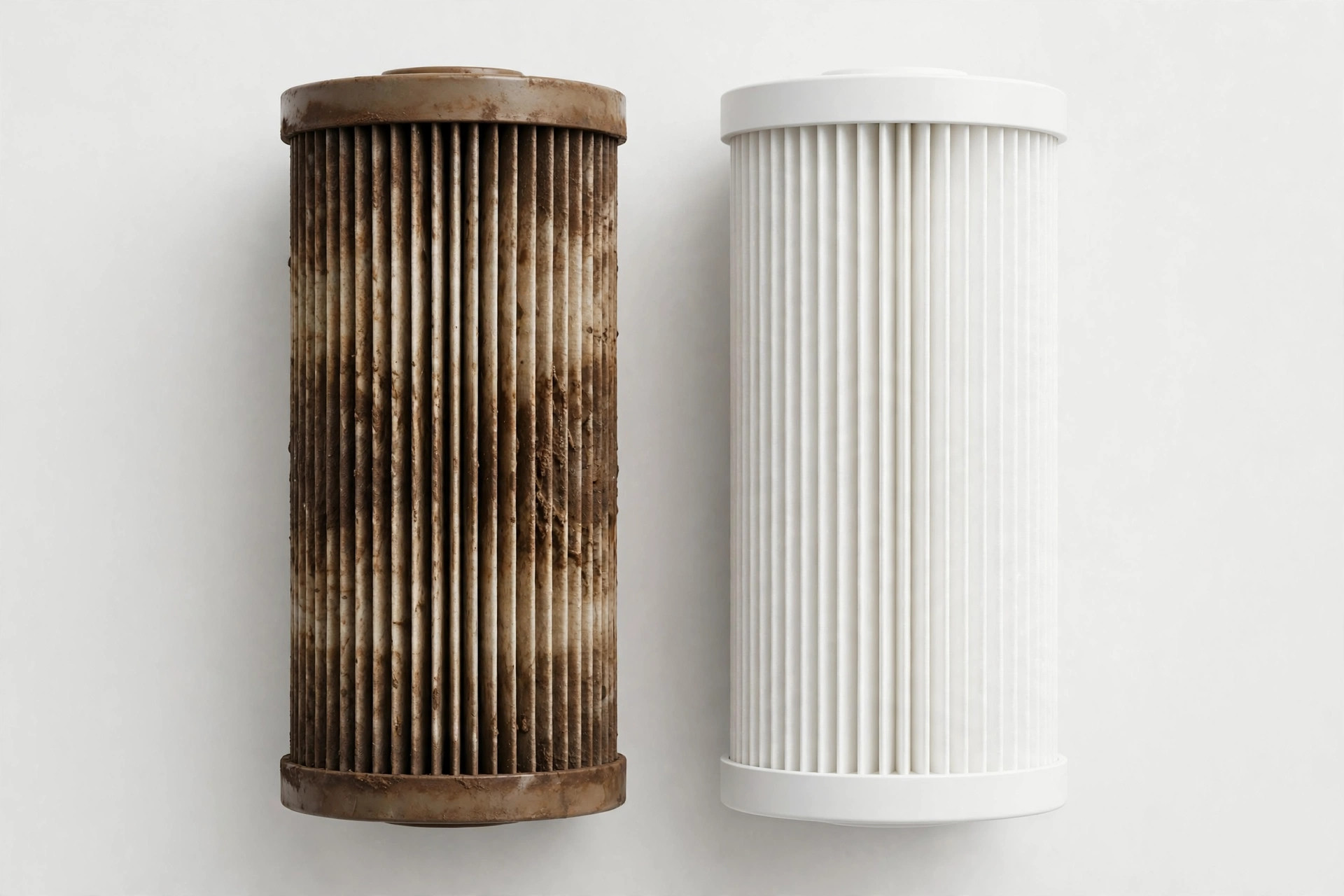
How to maintain an RO plant comes down to a schedule, not guesswork. Check pre-filters regularly and change them when they clog — dirty filters strain the pump and shorten membrane life. Clean membranes on schedule, watch the pump for noise and pressure drops, and record inlet and outlet TDS readings so a weak membrane shows up in numbers before it shows up in taste. As a general guide, filters are checked every few months and membranes often last one to two years depending on water quality and usage — but your readings, not a calendar, decide the change. Keep a small stock of spares and accessories for your model, and put the plant on an AMC so checks happen on time instead of after a breakdown.
5. How Do I Start an RO Plant?
Anyone searching how to start ro plant should begin with demand, not equipment — the plant comes after the numbers check out.
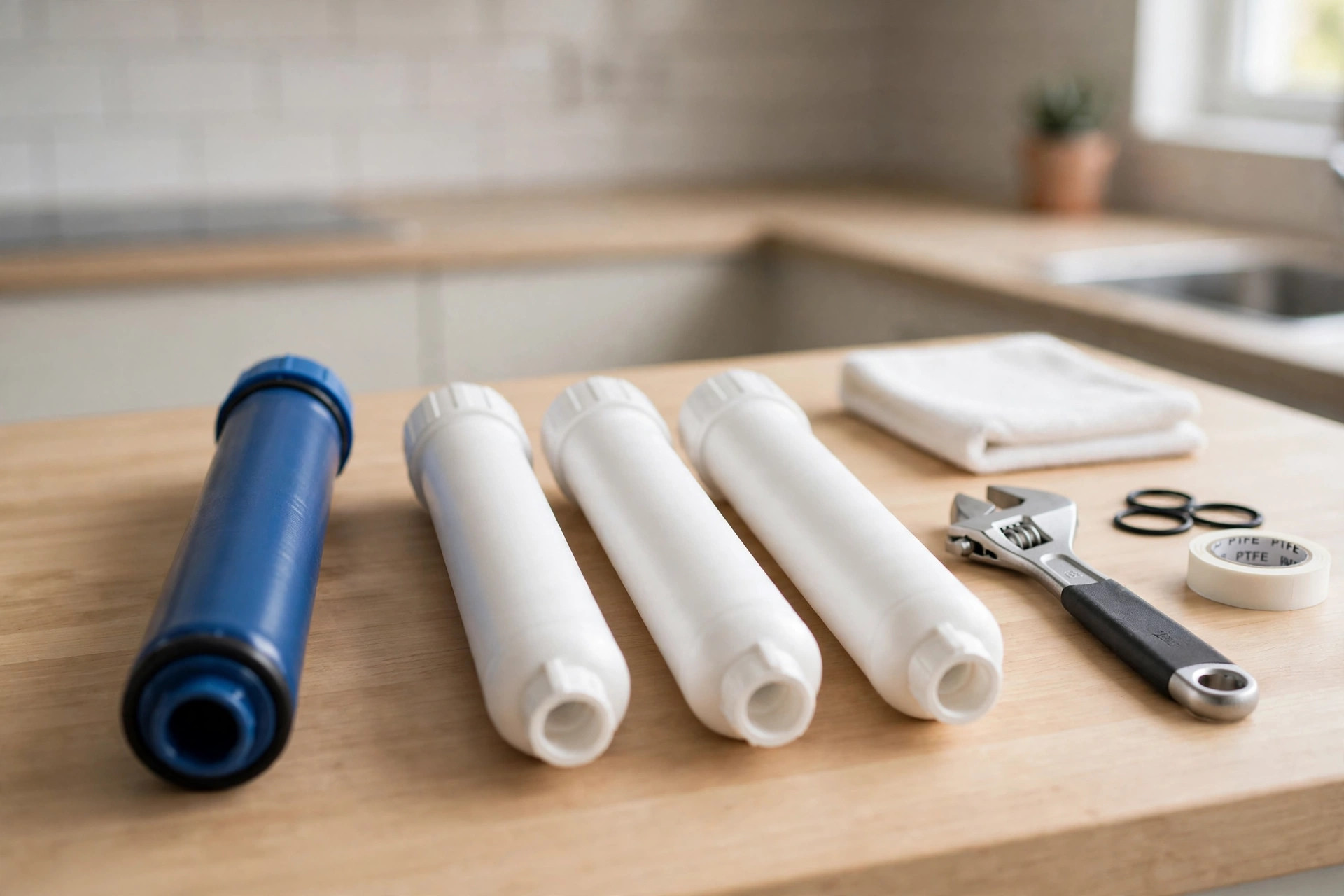
How to start an RO plant starts with demand, not equipment. First, confirm who will use the water and how much, every day. Second, test your feed water — TDS, hardness and source decide the plant design. Third, check space, power and drainage for reject water. Fourth, if you plan to sell bottled water, check the BIS and FSSAI requirements that apply to packaged drinking water before investing. Fifth, choose a service partner in Gujarat before you buy, because the cheapest plant with no service backup is the most expensive plant you will own. A written quote, a service schedule and a spares plan matter more than a discount on day one.
6. Is an RO Plant Business Profitable?
Two searches — is ro plant profitable and is ro plant business profitable — mean the same thing, and they share one honest answer.
Is an RO plant profitable, and is an RO plant business profitable, are two different questions with the same honest answer: it depends. Profit depends on daily demand, water and power costs, maintenance cost, distribution cost, and — most of all — uptime. A plant that stops for a week loses the week's sales and the customers' trust. No one can honestly promise a fixed profit figure without knowing your demand, your water source and your costs. What a service partner can promise is this: scheduled maintenance, fast breakdown response and genuine diagnostics keep downtime low, and low downtime is what protects whatever margin your business earns.
7. Which RO Plant Is Best for Home?
For a single home, a domestic RO purifier is usually the better answer than a plant. A plant needs space, higher power, and maintenance that a household does not need for its daily drinking water. If your search was for an RO plant near me for home, compare honestly: a domestic RO covers a family's drinking and cooking water at a fraction of the running cost. A plant earns its place when one system serves many families — a society, a hostel, a school — or a commercial site. Our domestic RO service guide covers the home side in detail.
8. What Does an RO Plant Do?
What does an RO plant do, step by step? Feed water first passes sediment and carbon filters that remove dust, chlorine and odour. Then a high-pressure pump pushes it through the RO membrane, which separates dissolved solids from pure water. The purified water goes to storage; the concentrated reject water is drained, and on larger plants an antiscalant dosing unit controls scaling on the membrane. Post-treatment, such as UV, may follow for drinking-water plants. That is what is inside an RO plant — filters, pump, membrane, controls and storage — and every one of those parts has a maintenance interval. If someone tells you a plant has no running cost, they have not explained the plant.
9. Where Do I Find an RO Plant Technician or Spare Parts Near Me?
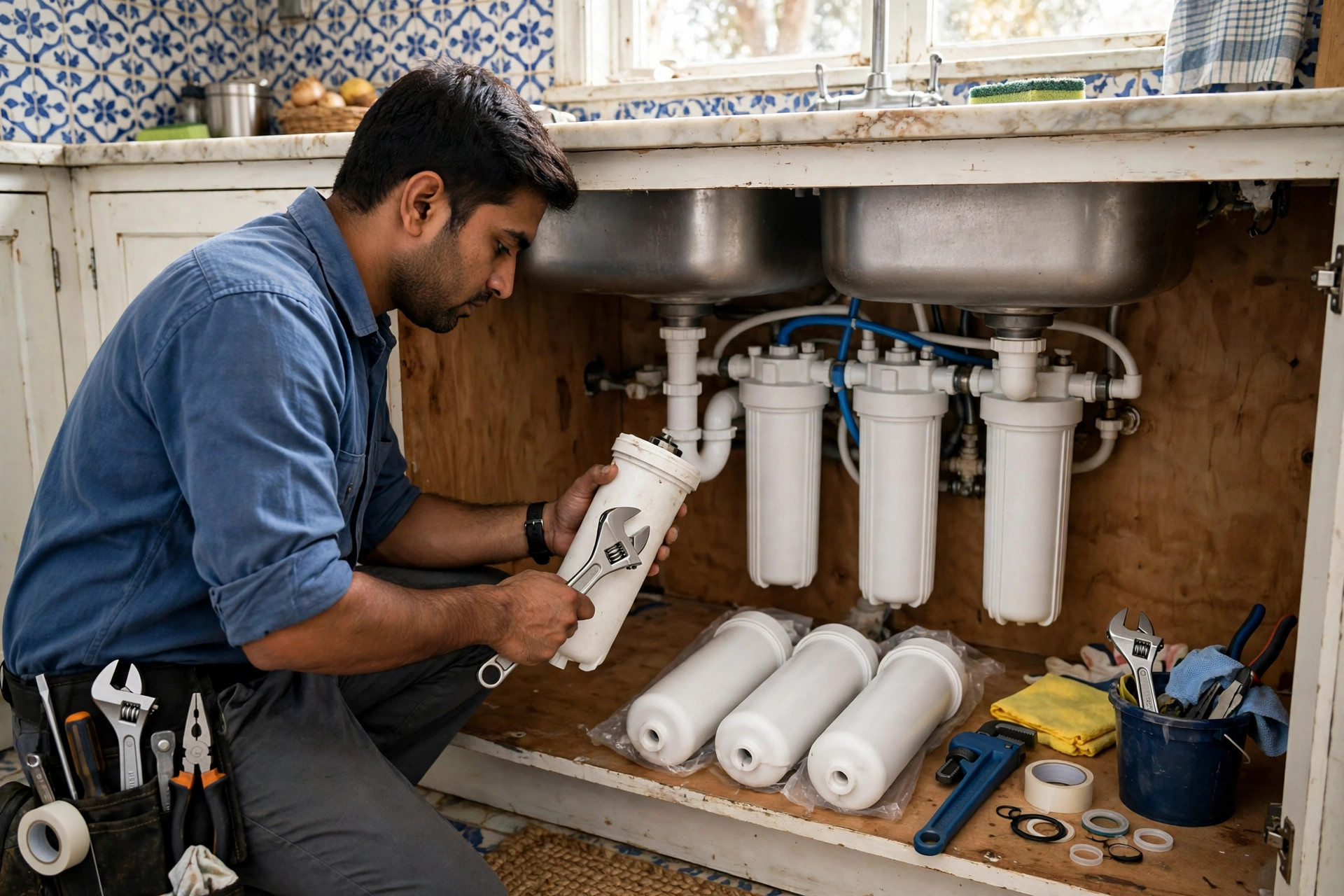
Search for an RO plant technician near me, a commercial RO plant technician near me, an RO plant mechanic near me, or an RO plant spare parts shop near me, and you will find sellers and service teams mixed together. Ask one question before booking: do you stock spares and accessories for my model, and how fast do you attend a breakdown? Nyasa Enterprise provides RO plant technicians and mechanics across Gujarat, with service, repair and spares support for plants regardless of make. If you are searching near my location or for a nearby RO plant shop, call 63560 23655 or 90162 67231 — Monday to Sunday, 8 AM to 8 PM, so a nearby RO plant search ends with a working number, not just a listing.
10. How Much Does RO Plant Service Cost?
Industrial RO plant service is ₹1,500 and an emergency visit is ₹2,000. Plant AMC is quoted on capacity and usage, because a 250 LPH school plant and a 2000 LPH factory plant do not carry the same maintenance load. Every visit starts with diagnosis before replacement, quality parts come with proper billing, and a 30-day service warranty applies. If a quote does not separate service, parts and AMC, ask for that separation before approving — it is the simplest protection against surprise bills, and it is standard practice at Nyasa Enterprise, an independent service provider serving Gujarat.