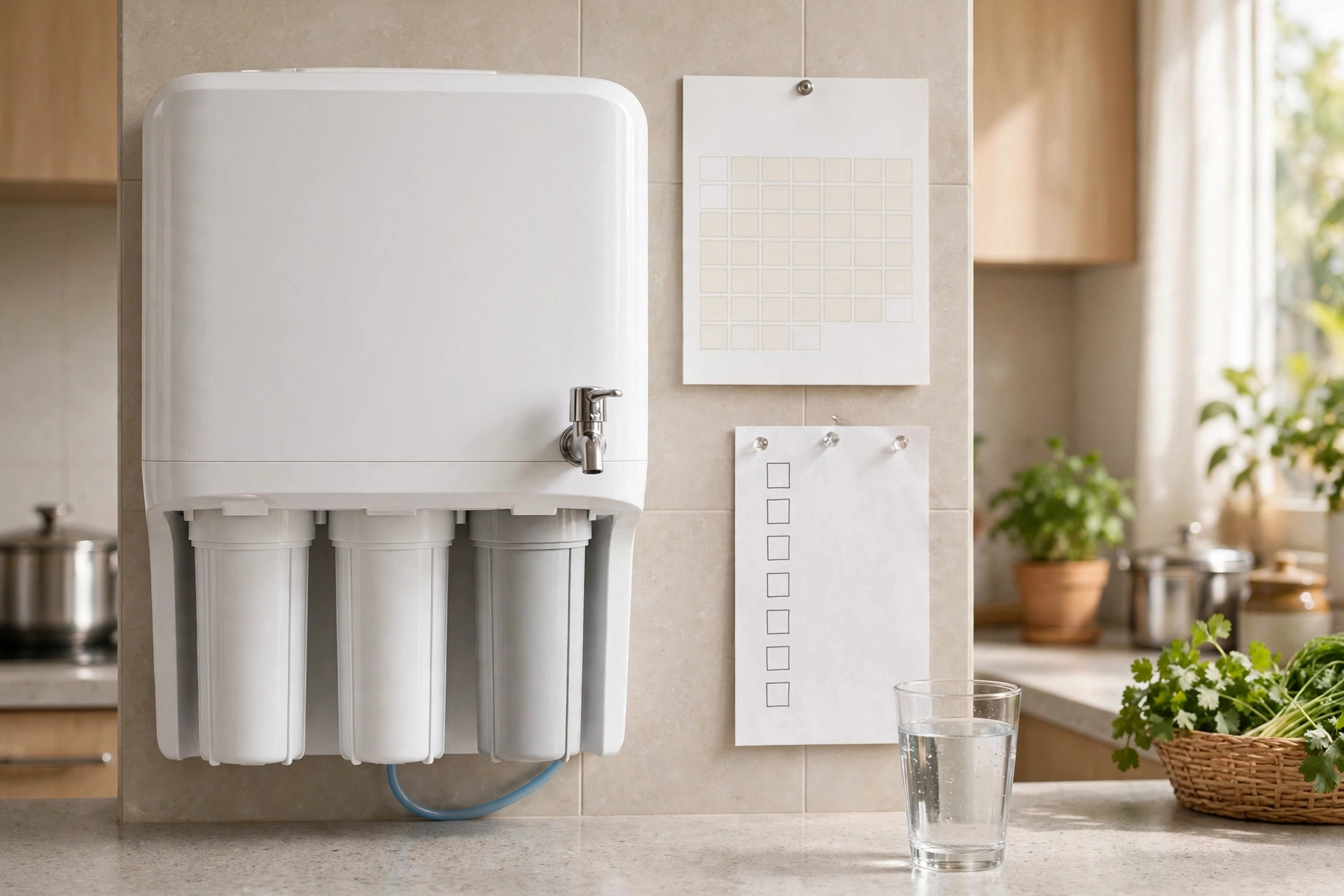
The technician has left, the tap is running again, and the purifier sounds normal. Most people stop thinking about the repair at that point — but the first day after a repair, and the habits that follow it, decide whether the fix lasts or the same fault returns within weeks. If you are looking for what to do after RO repair in Ahmedabad or Gandhinagar, this guide covers the first 24 hours, the TDS recheck, how the 30-day warranty claim works, and the maintenance habits that prevent a repeat repair. It applies to any domestic repair — a filter change, a membrane replacement, a pump or valve fix — and it takes five minutes to read but saves repeat visit charges.
The First 24 Hours After Repair
The most important step comes right after a filter or membrane change: flushing. New filters and membranes carry fine particles and preservatives from manufacturing, and the first water they produce is not meant for drinking. As a general rule, the first tank of water produced after a filter or membrane change is discarded — run it through and let it drain, exactly as the technician instructs for your model. Some models need one tankful, others need the first day's production run through before normal use; the technician will tell you the number on the visit, and it is worth following rather than guessing. During these first hours, also watch for the two things that signal a fitting problem: any drip from a pipe joint, elbow or the tap, and any unusual noise from the pump. A tiny drip in the first hours is not always a failure — a joint can settle — but a drip that continues into the next day should be reported, not wiped away repeatedly. Keep the purifier switched on and the inlet tap open during this period, so the system can complete its fill and shut-off cycles normally; switching it off and on repeatedly interrupts the settling process.
The TDS Recheck: Why It Matters
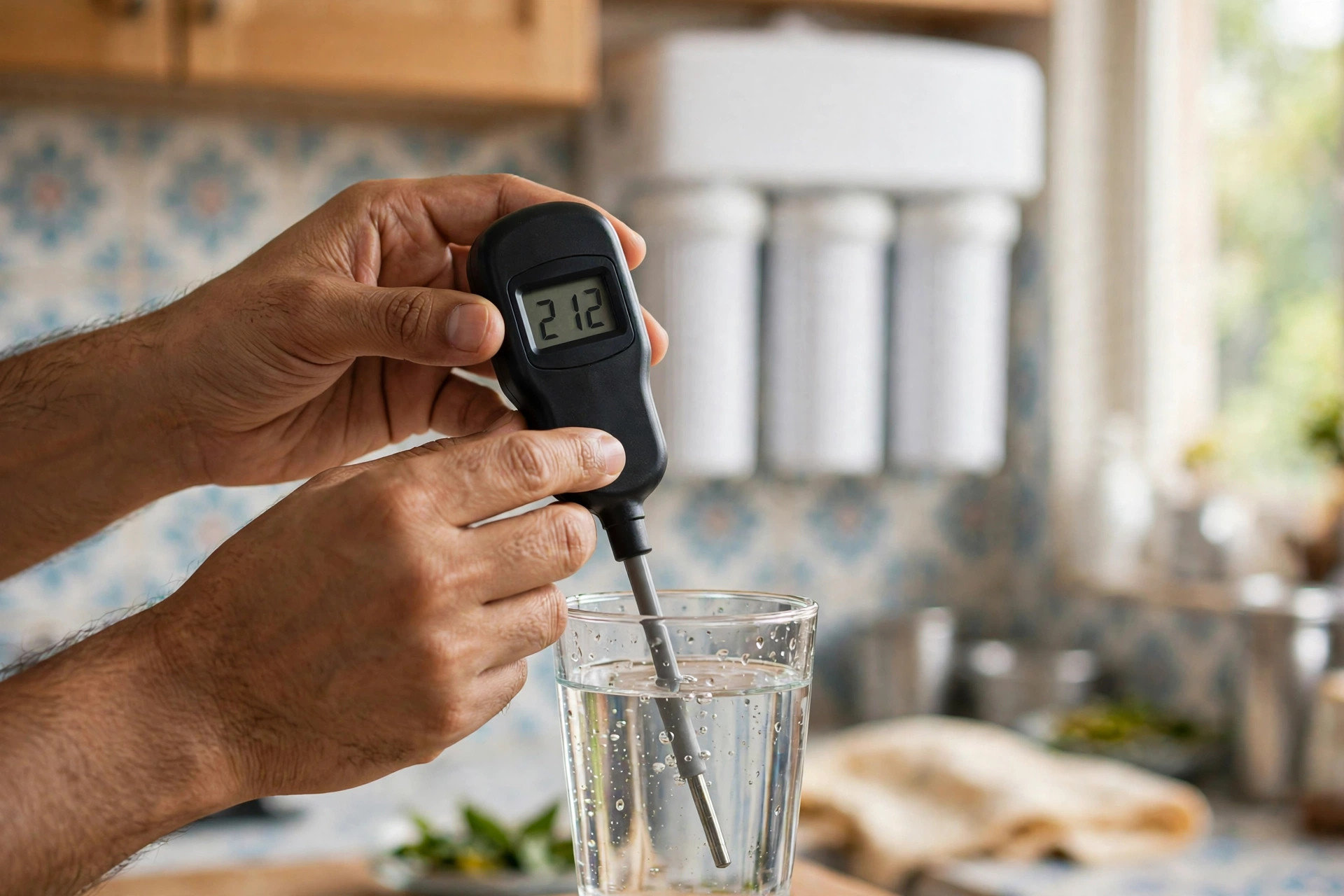
During the repair visit, the technician tests the TDS of your inlet water and purified water in front of you. That reading is your baseline — note it, or ask for it to be written on the job card. If a new membrane was fitted, the readings settle over the first day of normal use, which is why a recheck after that first day is useful: it confirms the membrane is performing as expected rather than merely working on the day of fitting. If you have a home TDS meter, test the same way — inlet versus purified — and compare with the visit reading. A large drop means the membrane is doing its job; a small difference means something needs a second look, and that is exactly what the 30-day warranty exists for. If you do not have a meter, the recheck can be done on a follow-up service visit at the standard ₹299 service charge, or as part of a warranty re-check if the same fault is suspected. Either way, do not judge water quality by taste alone — taste changes with temperature and storage, while a meter reading is objective. Our TDS and water quality guide explains what the numbers mean for Ahmedabad's municipal and borewell water.
Your 30-Day Warranty: How a Claim Works
Every repair from Nyasa Enterprise carries a 30-day warranty. Here is the claim process, step by step, so there is no confusion if you ever need it.
- Call either repair number — +91 63560 23655 or +91 90162 67231 — and say the same fault has returned. Mention that the repair is within its 30-day warranty period.
- Quote the original job details. The date of the repair, what was fixed, and any part that was replaced. The job card from the visit has all of this; keeping it is the one piece of paperwork that matters.
- The re-check is arranged. A technician revisits and re-runs the diagnosis for that fault. If the same fault has genuinely returned, it is handled under the warranty terms explained at the time of the original quote.
- A new fault is a new diagnosis. If the re-check finds a completely different, unrelated fault — or physical damage that happened after the visit — the technician will explain that plainly before any work starts, and a fresh quote applies. No work begins without your approval in either case.
The practical point: call early. A fault reported on day 5 is far easier to resolve under warranty than the same fault reported on day 40, when the warranty has expired and the visit becomes a fresh chargeable diagnosis. If you are unsure whether what you see is the same fault or a new one, describe the symptom on the call and let the technician decide on inspection — that judgement is free, and it is part of the diagnosis process described in the RO repair diagnosis guide.
Daily Habits That Prevent Repeat Repair
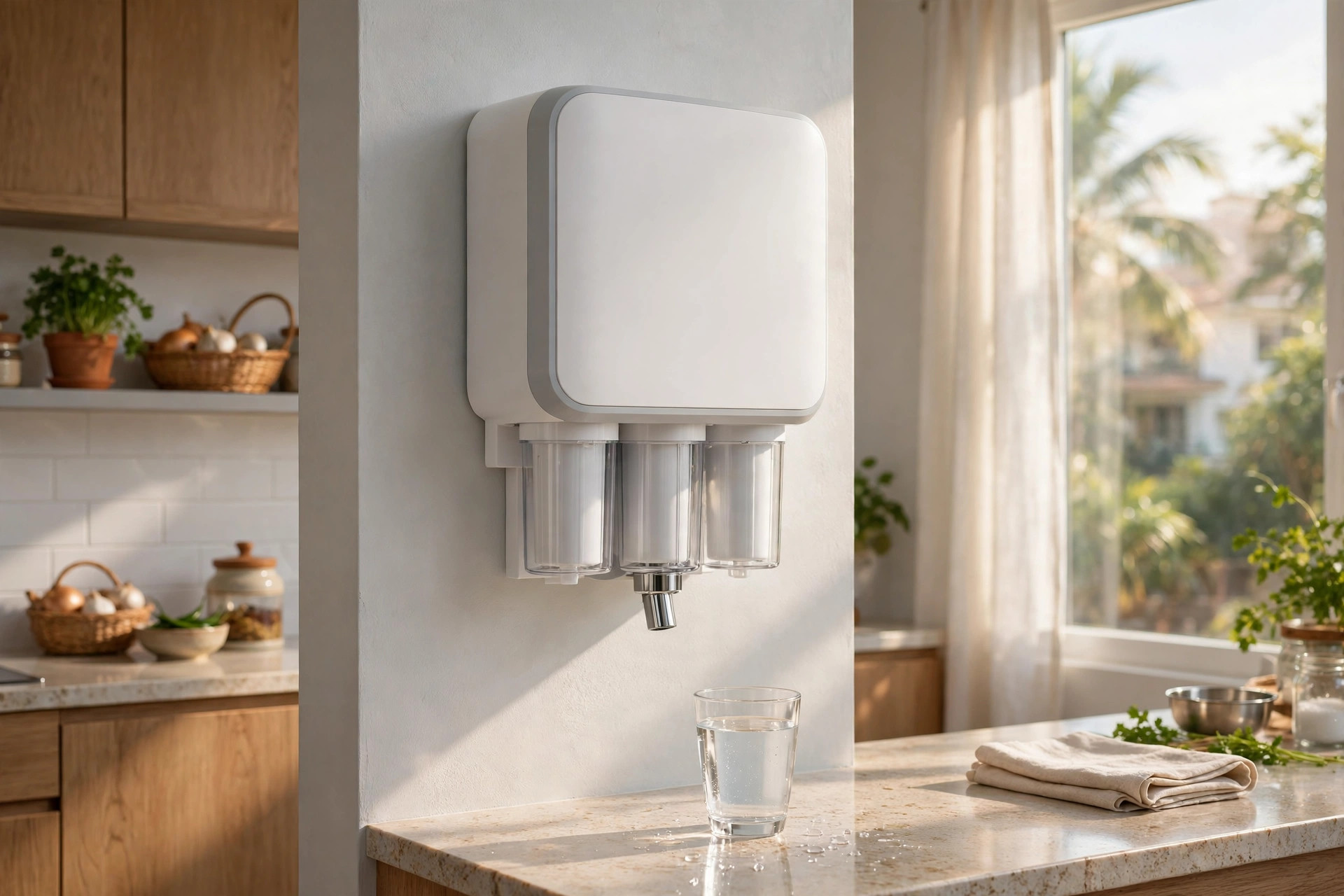
Most repeat repairs trace back to a handful of habits, not to bad luck. First, do not let the purifier sit unused for days with a full tank — stagnant water affects taste and gives scale time to settle. If you travel for a week or more, run the tap for a few minutes on return and discard the first stored water before drinking. Second, keep the area around the purifier dry and ventilated; constant dampness corrodes fittings and hides slow leaks until they become wall damage. Third, never ignore a gradually slowing tap. That slow decline is the early warning of a choking filter, and a filter change at that stage — from ₹199 — costs far less than the pump or membrane damage that follows months of strain. Fourth, if your home uses borewell water, accept that filters will clog faster and mention the water source at every booking, so the technician checks filters first. Fifth, write down filter and membrane change dates. The job card carries them, but a note on your phone means you never have to guess at the next booking. These five habits are the difference between a purifier repaired once and a purifier repaired every few months.
Your Service Calendar After a Repair
A repair resets the clock, but it does not remove the need for routine service. The usual pattern for a domestic purifier is a routine service at ₹299 once or twice a year — cleaning, filter inspection, TDS test and tank pressure check — with filter changes as inspection advises rather than on a fixed calendar. The RO service maintenance calendar lays out the full yearly pattern. After a major repair such as a membrane or pump replacement, the first routine service matters more than usual: it confirms the new part has settled, the TDS readings are stable, and no joint has started seeping. If the repair visit ended with an AMC recommendation, compare it honestly against per-visit costs in the repair vs AMC comparison — AMC plans from ₹1,999 per year cover scheduled services plus breakdown support, and for purifiers that need attention twice or more a year, the plan usually works out cheaper than paying per visit.
Red Flags: Call Back Without Waiting
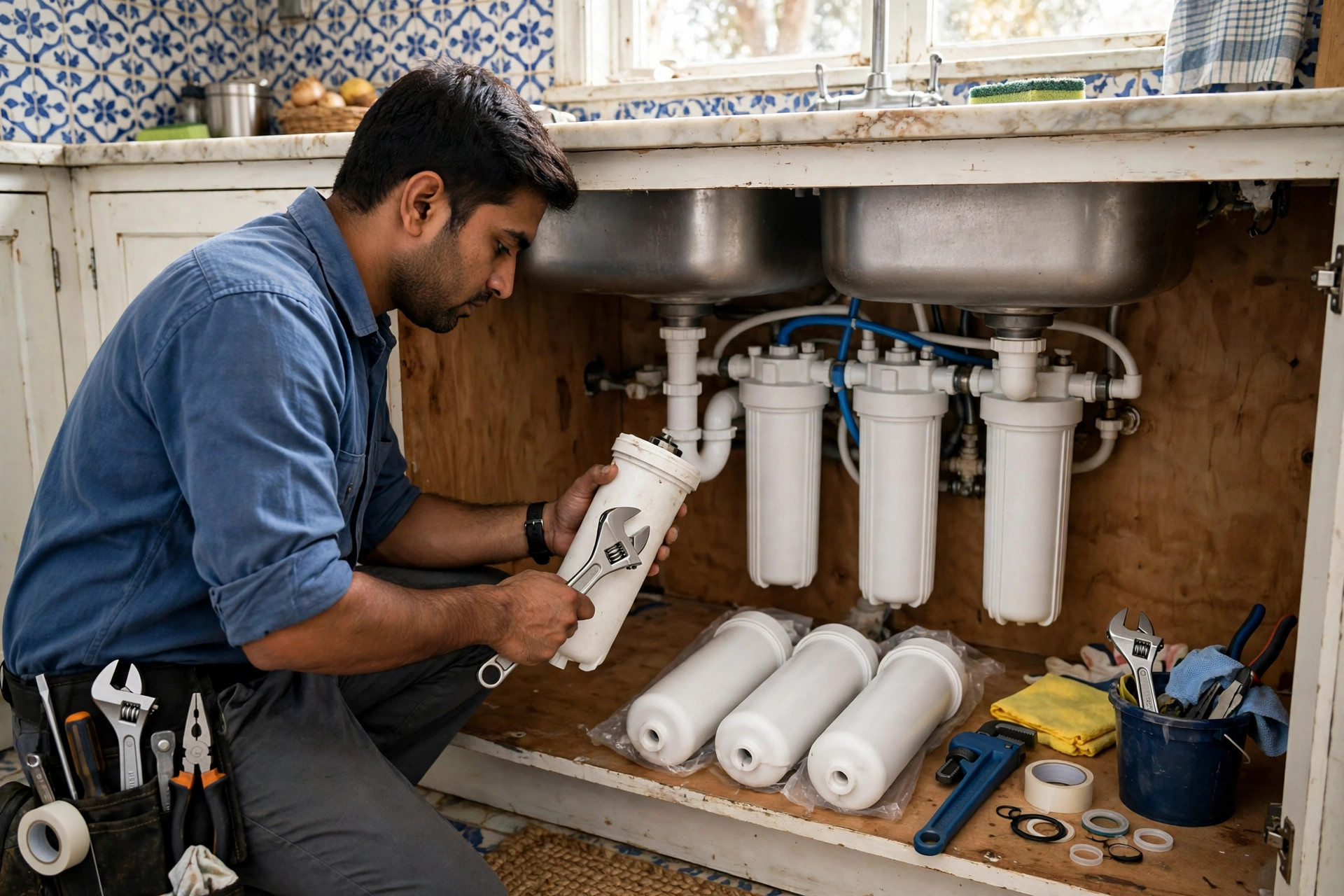
Some symptoms should never wait for the next scheduled service. Call back the same day if you see any leak from a joint, elbow or tap; if the pump develops a new grinding or rattling noise; if the flow drops sharply again within days of the repair; if the water suddenly tastes metallic, bitter or otherwise sharply different; or if the drain pipe starts running continuously when the tank is full — the fault covered in the reject water repair guide. If water is leaking, close the inlet valve and switch the purifier off while the technician is on the way. Early calls keep small issues small, and within the 30-day warranty window they cost you nothing but the call itself.
From One Repair to a Longer Plan
A single repair is a transaction; a service plan is what keeps the purifier out of trouble. After any repair, ask the technician two questions before they leave: what is the next part likely to need attention, and when should the next service happen? The answers, written on the job card, turn a one-off fix into a plan. Homes in Ahmedabad and Gandhinagar with municipal water and a regularly serviced purifier rarely see repeat breakdowns; homes that wait for a breakdown before calling see the same faults return. The repair is done — the care after it is what makes it last. For bookings, follow-ups or warranty questions, the numbers are the same as ever: +91 63560 23655 and +91 90162 67231, Monday to Sunday, 8 AM to 8 PM, for doorstep service across Ranip and all areas of Ahmedabad and Gandhinagar.
Keeping the Job Card: Why It Matters
The job card from your repair visit is a small piece of paper that carries real weight: the date, the fault found, the parts fitted, the TDS readings, and the next service due date. Keep it — or photograph it — because it is the reference for everything after the repair. A warranty claim starts from it, the next technician reads it before touching the machine, and filter change dates on it remove all guesswork at the next booking. If the card is lost, the booking desk can still look up the visit from your phone number and address, but having the card in hand makes the call shorter and the re-check faster. Treat it the way you would a bill for any home appliance: filed, not discarded.
Before the Technician's Next Visit
When the next service or follow-up is due, three small preparations make the visit smoother. Clear the area around the purifier so every joint and valve is reachable without moving heavy items. Note any change since the repair — a new noise, a slower tap, a different taste — even if it seems minor; small observations guide the diagnosis. And keep the purifier running normally in the days before the visit rather than switching it off, so the technician sees its real behaviour instead of a machine that has been idle. These preparations cost nothing, but they turn a routine visit into a thorough one, and they are the reason some homes go years between repairs while others call every few months.