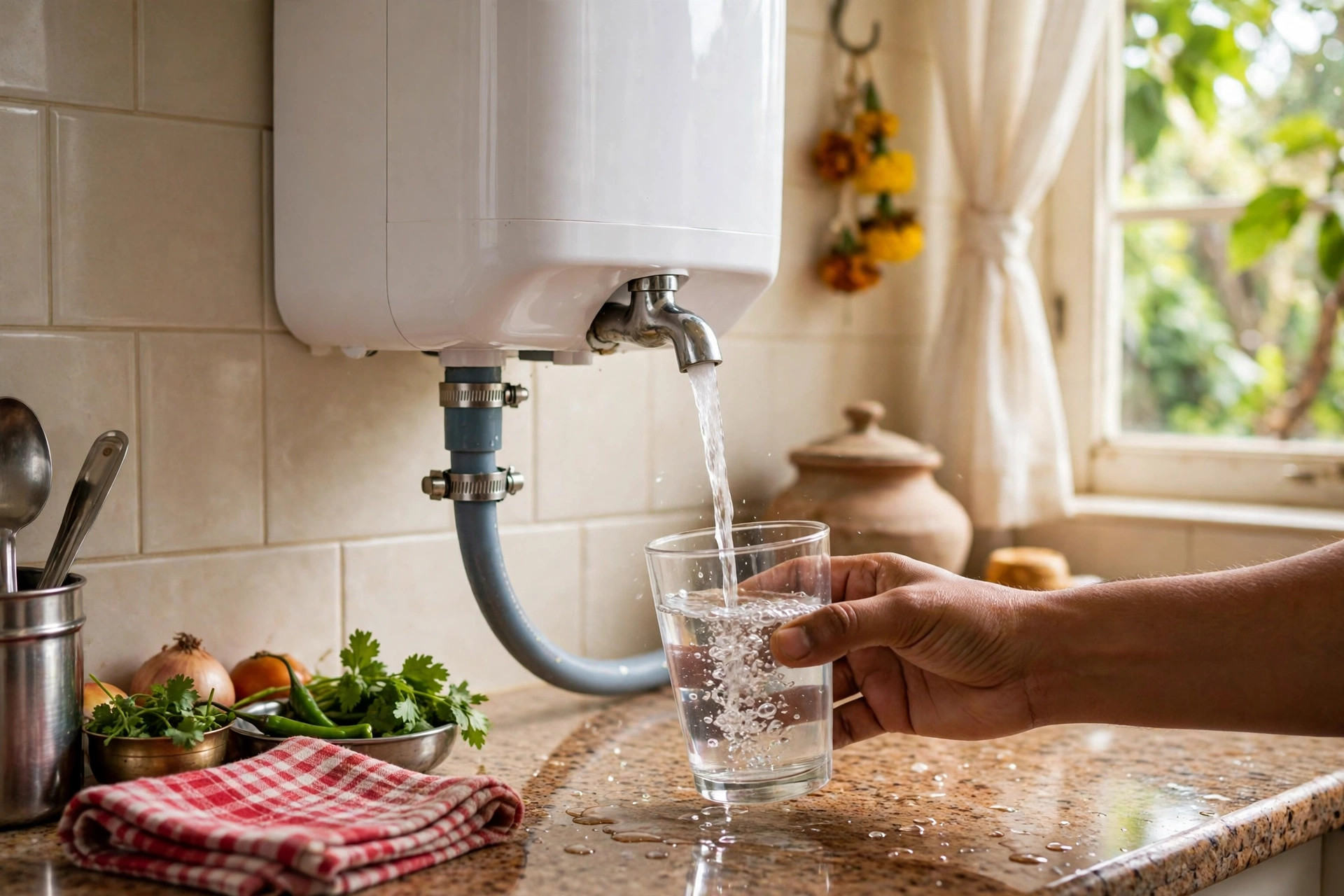
Every RO purifier sends some water to the drain — that is normal, and it is how the membrane flushes away the salts it removes. The problem begins when the drain pipe keeps running all day, even after the storage tank is full, or when the drain flow suddenly becomes far heavier than before. If you are searching for RO repair Ahmedabad because of a continuously running drain, this guide explains why it happens, which parts control reject water, how a technician finds the fault, and what the fix costs in Ahmedabad and Gandhinagar. Left alone, a continuous drain wastes a large amount of water and keeps the booster pump running far longer than designed, which wears it out faster — so this is a same-day repair, not a next-month one.
Is Reject Water Normal? Yes — Until It Never Stops
An RO membrane works by pushing water through a fine filter: part of the water comes out purified, and the rest carries the rejected salts to the drain. While the purifier is actively filling the tank, drain flow is expected. The key moment is when the tank becomes full. At that point, the system should shut itself off: the tank float signals full, the auto shut-off valve closes, and both the pump and the drain flow stop. If the drain keeps running hours after the tank is full, or runs through the night when nobody has used water, the shut-off chain has failed somewhere. That is the fault this guide covers. A second warning sign is a sudden change: if your drain flow was modest for months and is now a strong, continuous stream, something has changed inside the machine even if the drinking water still tastes fine.
The Parts That Control Reject Water
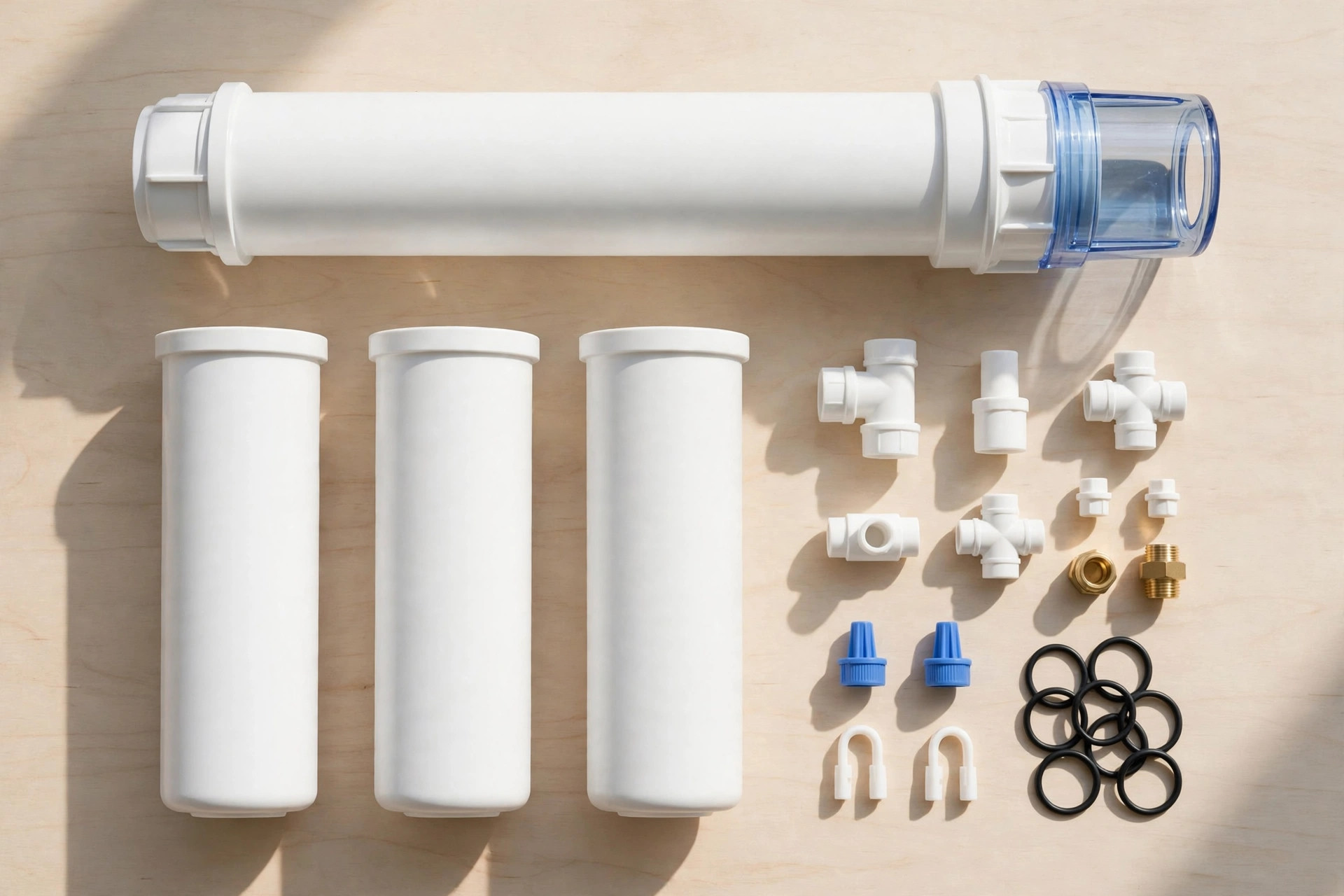
Four parts decide whether drain water flows or stops. Understanding them makes the diagnosis — and the quote — easy to follow.
Solenoid valve (SV)
The solenoid valve is an electrically operated inlet valve: it opens when the purifier runs and closes when the system shuts off. If it jams open — mechanically stuck, or scaled up by hard water — water keeps entering the system and going straight to the drain even when the tank is full. A jammed solenoid valve is the single most common cause of a continuously running drain, and it is tested electrically before replacement, not guessed at.
Auto shut-off valve (ASV)
The auto shut-off valve senses tank back-pressure: when the tank is full, pressure rises and the valve closes the feed to the membrane, stopping both purification and drain flow. A worn or failed shut-off valve never gets that signal, so the purifier behaves as if the tank were always empty. This fault often arrives gradually — the drain runs a little longer each week — before becoming continuous.
Flow restrictor (FR)
The flow restrictor is a small part in the drain line that limits how fast reject water can leave. It keeps the membrane under the right pressure. A worn or wrongly sized restrictor lets too much water escape, which shows up as heavy drain flow, noise in the drain pipe, and slower tank filling. Restrictors are inexpensive, but they must match the membrane capacity — fitting the wrong one creates a new problem while fixing the old one.
Tank float valve and check valve
The tank float valve signals when the tank is full, and the check valve stops drain water from flowing back into the system. A float valve that never signals full leaves the system running forever; a failed check valve lets the system lose shut-off pressure, so the drain never properly stops. Both are checked during diagnosis whenever continuous drain is the complaint.
How Diagnosis Finds the Fault
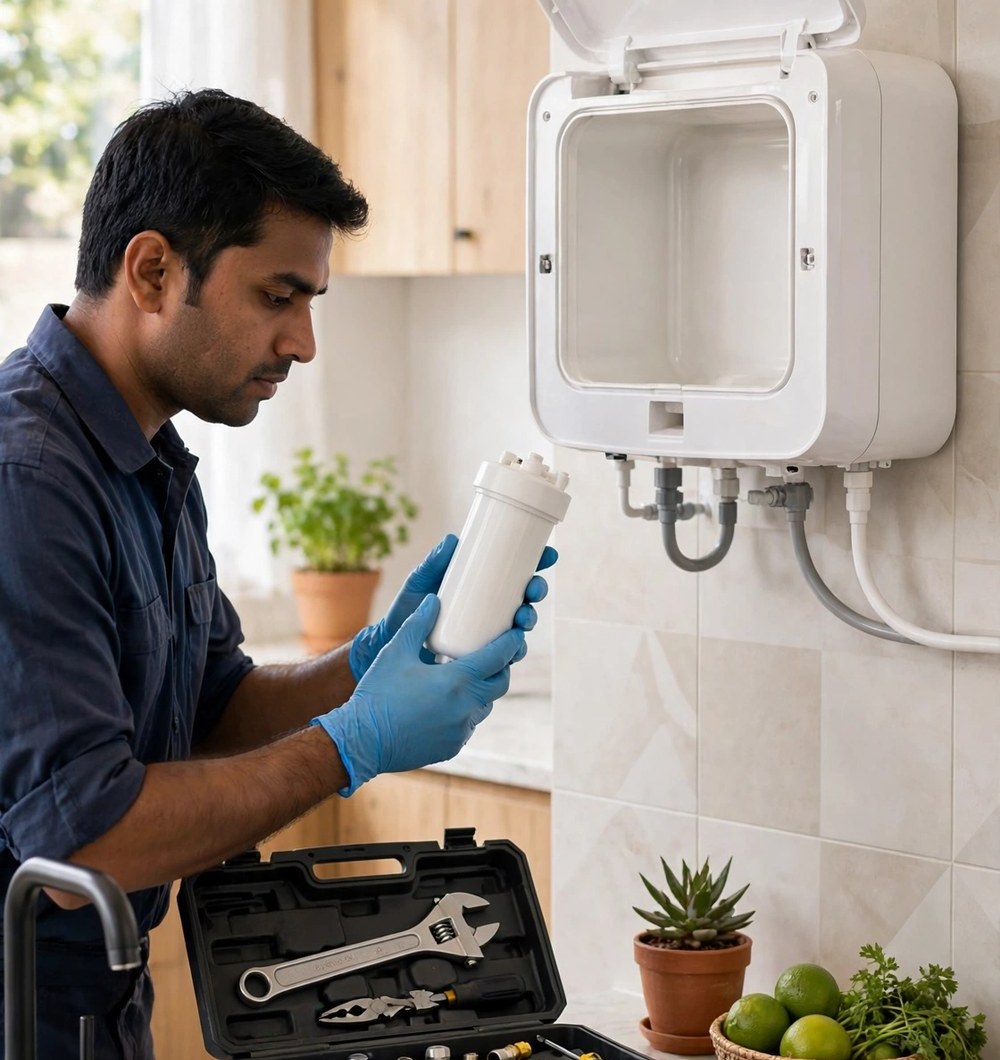
Reject-water diagnosis follows the same fixed order as our RO repair diagnosis guide, with extra attention on the shut-off chain. The technician first confirms the symptom: is the tank actually full while the drain runs, or is the tank never filling at all? That one observation splits the fault in two. A full tank with a running drain points at the solenoid valve, shut-off valve or float valve. A tank that never fills points more towards the membrane, pump or inlet supply — a different repair covered in the no-water and low-flow guide. Next, each valve is tested in turn — solenoid operation, shut-off response to tank pressure, restrictor condition and float signalling — and the TDS of the purified water is checked, because a membrane fault can sit behind a drain problem too. Only after the faulty part is identified does the technician quote its price and ask your approval. Nothing is fitted on suspicion.

What the Fix Costs
| Service | Charge |
|---|---|
| Doorstep visit (diagnosis included) | ₹150 |
| Domestic RO service and repair | ₹299 |
| Priority visit (urgent breakdown) | ₹399 |
| Filter replacement | ₹199 onwards |
| AMC plans (scheduled services + breakdown support) | ₹1,999 / ₹2,999 / ₹3,999 per year |
Valve and restrictor prices are quoted upfront after diagnosis, since they vary by brand and model — the full picture is in the RO repair charges guide. The comparison is worth making: several Ahmedabad repair pages quote a flat ₹399 for repair alone, while here the visit is a fixed ₹150 and the repair starts at ₹299, with parts itemised separately. If you decline the work after diagnosis, you pay only the ₹150 visit charge. A reject-water fix is usually completed in a single visit, because valves and restrictors are small parts the technician carries in the kit once your brand and model are known from the booking call.
What Continuous Drain Costs You
The cost of ignoring a running drain is not just the water bill. First, the wasted water itself: a purifier stuck in continuous-drain mode can send many times its normal daily drain water down the drain, day after day, until the fault is fixed. Second, the pump: it runs far longer than designed, which shortens its life and can turn a small valve repair into a pump repair later. Third, the membrane: continuous operation without proper shut-off cycles strains it unnecessarily. Put together, a fault that starts as one small valve can, over weeks, become three parts instead of one. That is why the advice is simple — if the drain runs when the tank is full, close the inlet valve, switch the purifier off, and book a visit the same day. A priority visit at ₹399 exists for urgent breakdowns, and a running drain qualifies.
Reject Water Repair Across Ahmedabad and Gandhinagar
Doorstep reject-water repair is available across Ahmedabad — including RO service in Ranip, Chandkheda, Bopal, Gota, Naranpura, Satellite, Sabarmati, Maninagar, Nikol, Naroda, Vastrapur and Thaltej — and across Gandhinagar, including Sargasan, Kudasan, Raysan, Randesan, Infocity, Gift City and all sectors, served from the RO service in Gandhinagar base. When you call the RO repair contact number, mention that the drain runs continuously and whether the tank is full — those two facts let the technician bring the right valves on the first visit. Domestic repair service is limited to Ahmedabad and Gandhinagar, stated plainly so nobody outside them is given a false promise.
Preventing Repeat Reject-Water Faults
After the repair, three habits keep the shut-off chain healthy. First, do not ignore a drain that runs a little longer than usual — that gradual change is the early warning of a wearing shut-off valve, and catching it early means one small part instead of a worn pump later. Second, keep the routine service schedule: a service at ₹299 includes a check of valves, TDS and tank behaviour, which catches shut-off faults before they become continuous. Third, if your home uses hard or borewell water, say so at every booking — scale builds up faster on valves and restrictors in hard water, and the technician will check those parts first. If your purifier also leaks from joints or the tap, read the companion RO leakage repair guide, because leakage and drain faults sometimes share the same worn fitting. And if the purified water tastes off or the TDS reading looks wrong after the fix, the membrane replacement guide explains what those readings mean before any further part is changed.
Reject Water and High TDS: Are They Linked?
Customers often ask whether a running drain means the membrane has failed. The honest answer is: not always, but the two are checked together. A healthy membrane produces purified water with a TDS far below the inlet water; a weak membrane lets TDS stay high. A faulty shut-off valve, on the other hand, wastes water without necessarily changing TDS at all. During diagnosis, the technician therefore tests both: the drain behaviour (does it stop when the tank is full?) and the TDS readings (inlet versus purified). If the drain runs non-stop but TDS is healthy, the fault sits in the valve chain, and the membrane is left alone — replacing it would waste your money without stopping the drain. If TDS is also high, the membrane joins the suspect list, and the membrane replacement guide explains how that call is made from meter readings. Either way, the two tests together prevent the most common misdiagnosis in reject-water complaints: changing the most expensive part for a fault that lives in a small valve.
A Simple Monthly Check You Can Do
You do not need tools to catch a reject-water fault early. Once a month, notice two things. First, after the tank fills and nobody uses water for an hour, is the drain pipe silent? It should be — silence means the shut-off chain worked. Second, has the drain flow changed since last month — stronger, noisier, or longer-running than before? A gradual change is the early warning of a wearing shut-off valve or restrictor, and reporting it at that stage means one small part instead of a worn pump later. Note the observation alongside your filter change dates, and mention it at the next service visit even if the purifier still seems to work. Technicians would much rather check a valve early than replace a pump that ran for months against a fault nobody reported. This monthly check costs nothing, takes a minute, and is the single most effective habit for keeping reject water under control between services.