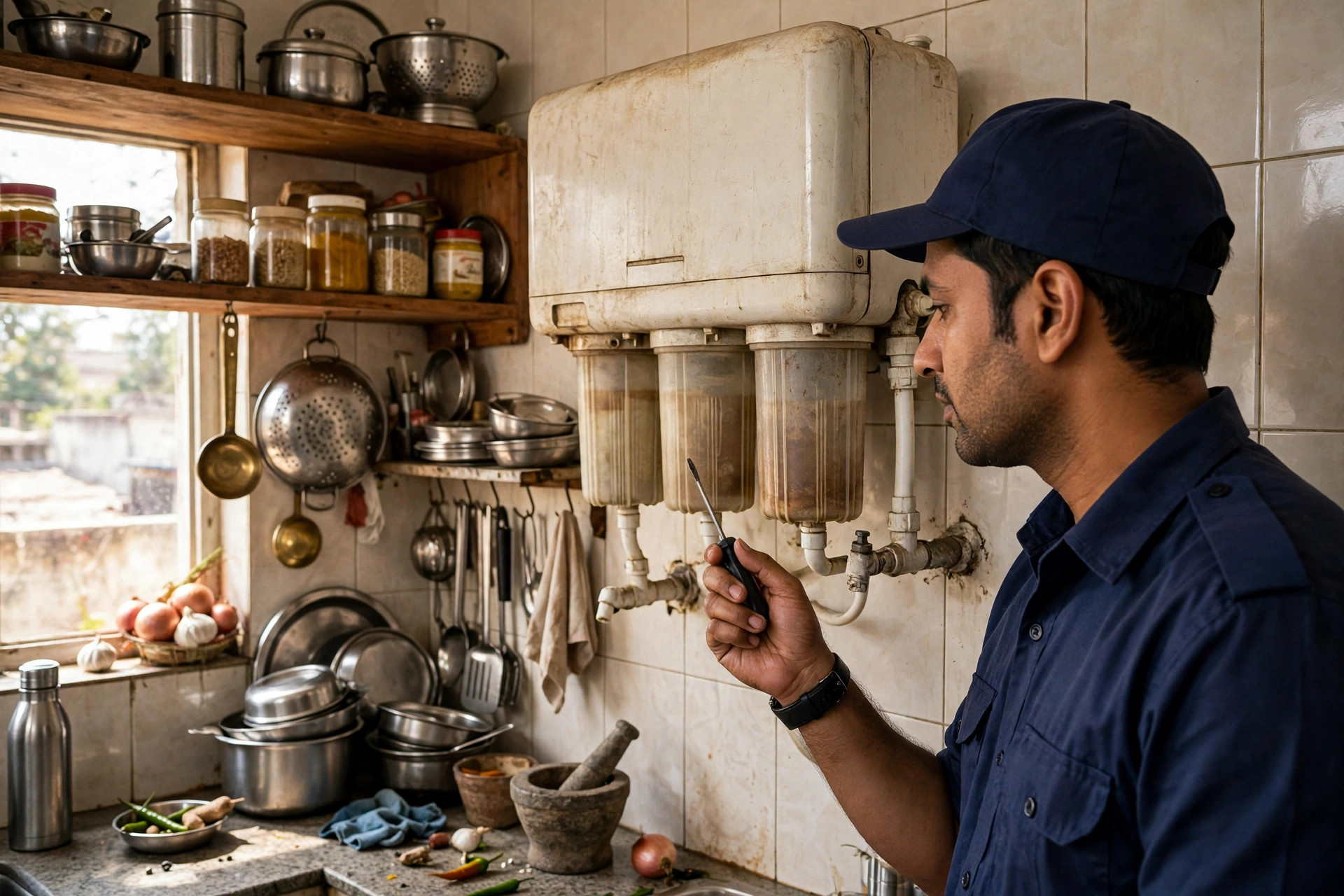
How long does an RO water purifier last? The unit itself can keep working for years — what wears out are its parts, each on its own cycle, and how fast they wear depends on your water and your maintenance. This guide explains which parts wear out first, the signs that say replace rather than repair, what to do after the warranty ends, and how regular service stretches the life of the whole unit. For RO service in Ahmedabad, Nyasa Enterprise diagnoses purifiers at your doorstep, Monday to Sunday, 8 AM to 8 PM — and the TDS check on the visit is what decides whether a part needs replacing.
How Long Does an RO Water Purifier Last?
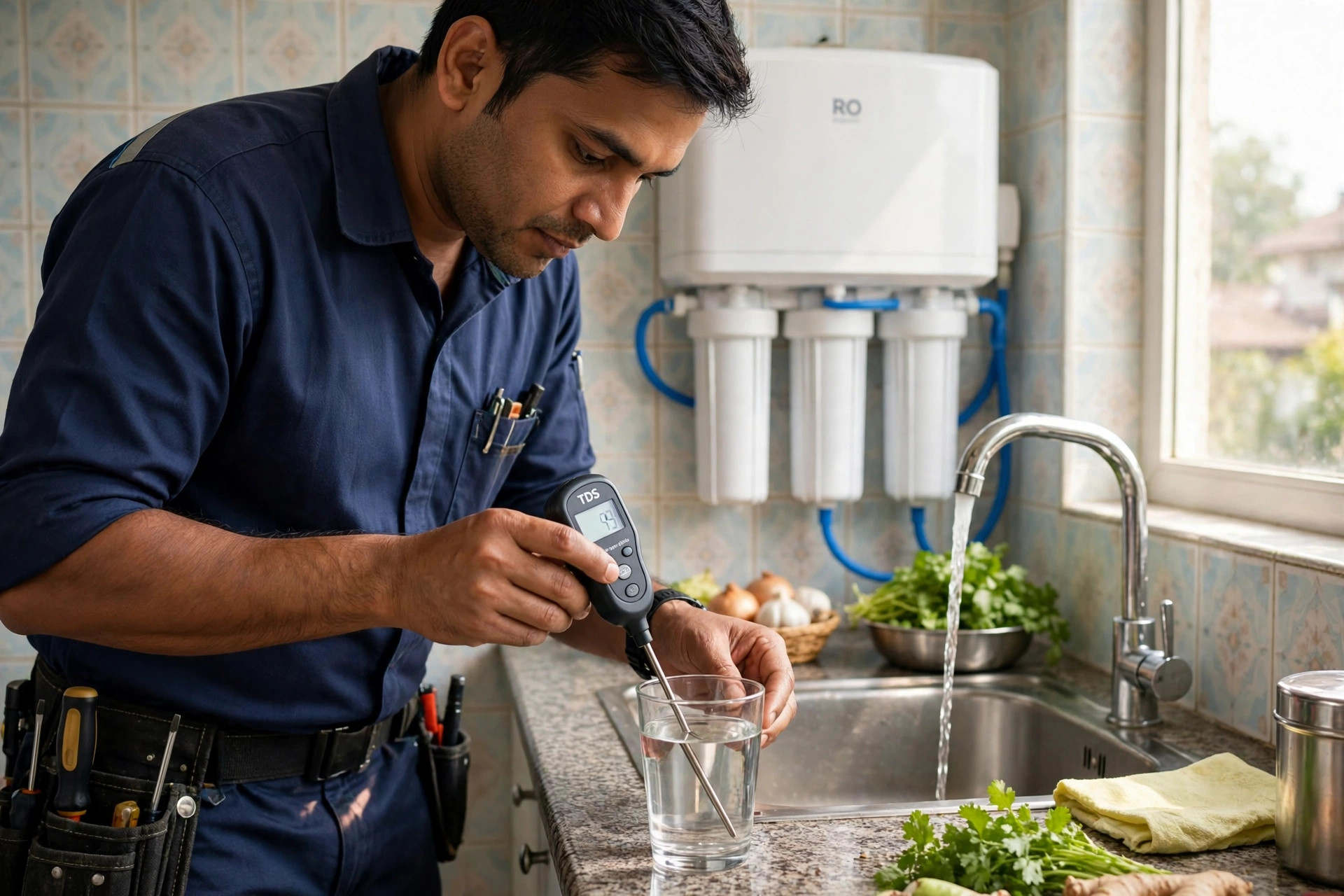
There is no single number. A purifier on low-TDS municipal water that is serviced on time will outlast the same model on hard borewell water that is never serviced — the water and the maintenance decide, not the calendar. Service guides commonly quote a few months for pre-filters and two to three years for a membrane, but those are planning figures, not a verdict on your unit. The only reading that matters is your own: the TDS of your inlet water against the TDS of your purified water, measured on a visit. A wide gap means the membrane is still doing its job; a narrowing gap means it is tiring, whatever its age.
The Parts That Wear Out First
Four parts carry the wear, in order:
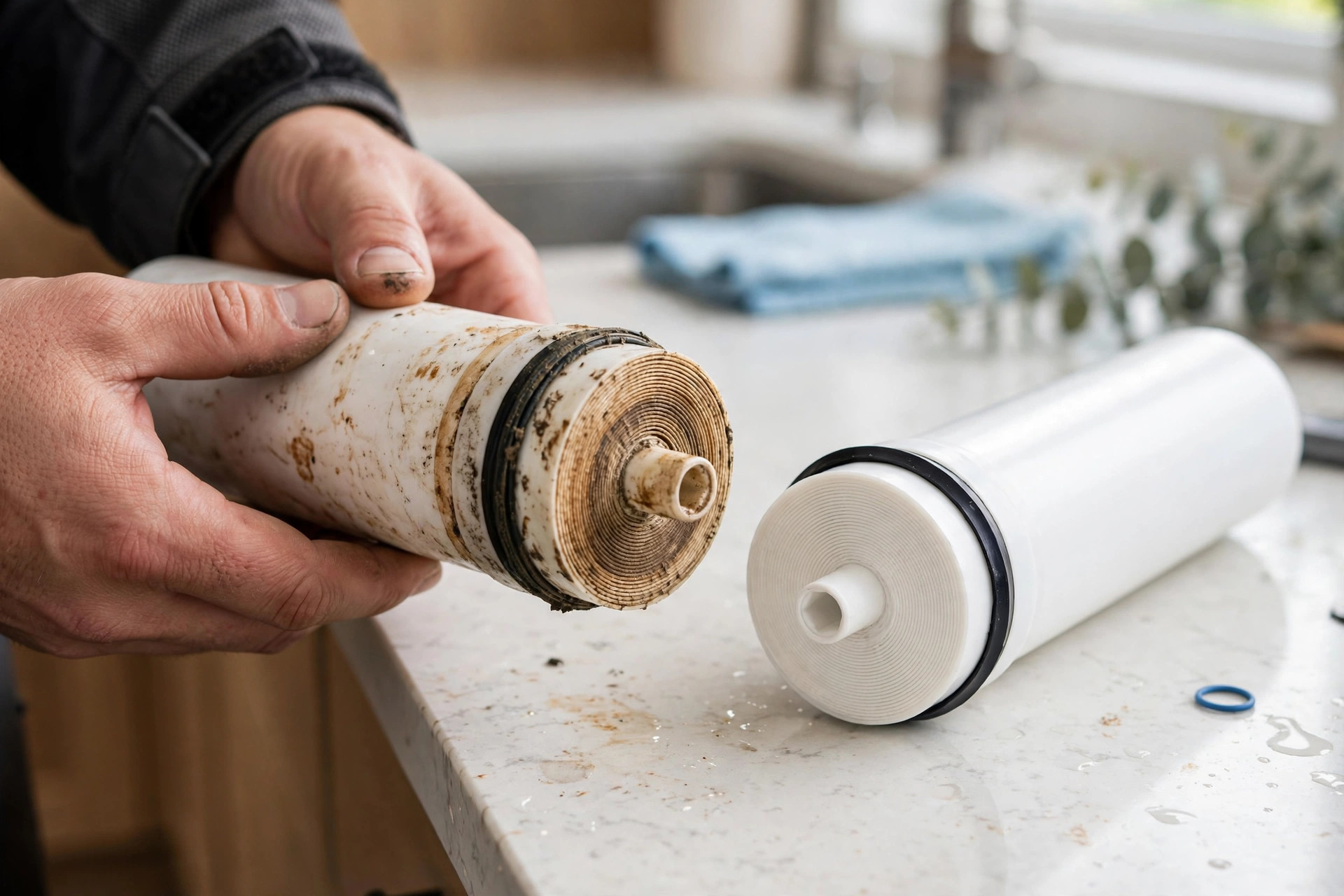
- Pre-filters (sediment and carbon) — they catch dirt and chlorine before the membrane. Neglected pre-filters are the main reason membranes die early: a choked pre-filter starves the membrane, and a spent carbon filter lets chlorine reach it.
- The RO membrane — the heart of the unit. Hard water and high TDS load it faster; a membrane behind fresh pre-filters lasts far longer than one behind neglected ones.
- The pump — it works against inlet pressure. Low pressure makes it strain; a pump that sounds different is warning you early.
- The storage tank — it loses pressure slowly over the years, which shows up as a tank that takes longer to fill or a tap that runs weakly.
Ahmedabad's water makes this concrete: TDS swings from 200 to 1,500+ ppm across the city, and borewell water loads filters faster than municipal supply. The technician measures both readings at every visit, so the wear on your unit is tracked in numbers, not guessed from its age.
6 Signs It Is Time to Replace, Not Repair
One of these signs means book a check. Two or more together usually mean a part — or the unit — is at the end of its working life:
- Salty or bitter taste that a filter change does not fix.
- Output TDS creeping up towards the inlet reading.
- Slow flow even after a filter change — the membrane or the pump is the cause, not the filter.
- Breakdowns that keep coming back within weeks of a repair.
- Leaks at housings or joints that return after the seals are changed.
- A pump noise that returns after service — the pump itself is wearing out.
Repair or Replace? How to Decide
Use three questions. First, what does the repair cost — the visit is ₹150, service is ₹299, and any part is quoted before fitting, so you know the number before you decide. Second, how many major parts need replacing at once — one part is a repair; a membrane plus a pump plus a tank together can cost more than the unit is worth. Third, how often has it broken down — a unit that needs a repair every few weeks is telling you its working life is over. The technician advises after a check, with the readings in front of you — the decision stays yours.
What to Do After the Warranty Ends
When the manufacturer warranty ends, nothing about the service changes. The same visit rates apply — ₹150 visit, ₹299 service, parts quoted before fitting — and an AMC plan can cover the year ahead. For RO service in Ahmedabad after warranty, call and share the brand, model and symptom; the technician carries the right parts on the first visit. For the warranty terms on a new purifier, check the manufacturer's warranty document that came with the unit — Nyasa Enterprise is an independent service provider, not a manufacturer service centre.
How Regular Service Extends Life
Service extends life in two ways. First, pre-filters changed on time protect the membrane, which is the most expensive part to replace. Second, the TDS check on each visit catches decline early — a membrane caught while it is tiring can often be managed, while one left until it fails can take the pump with it. A service visit is ₹150 plus ₹299, and the readings from the visit are yours to keep.
Book a Lifespan Check for Your Purifier
Call 63560 23655 or 90162 67231 between 8 AM and 8 PM, Monday to Sunday. Share the symptom and your area — the full total, including any parts, is confirmed on the call itself.